


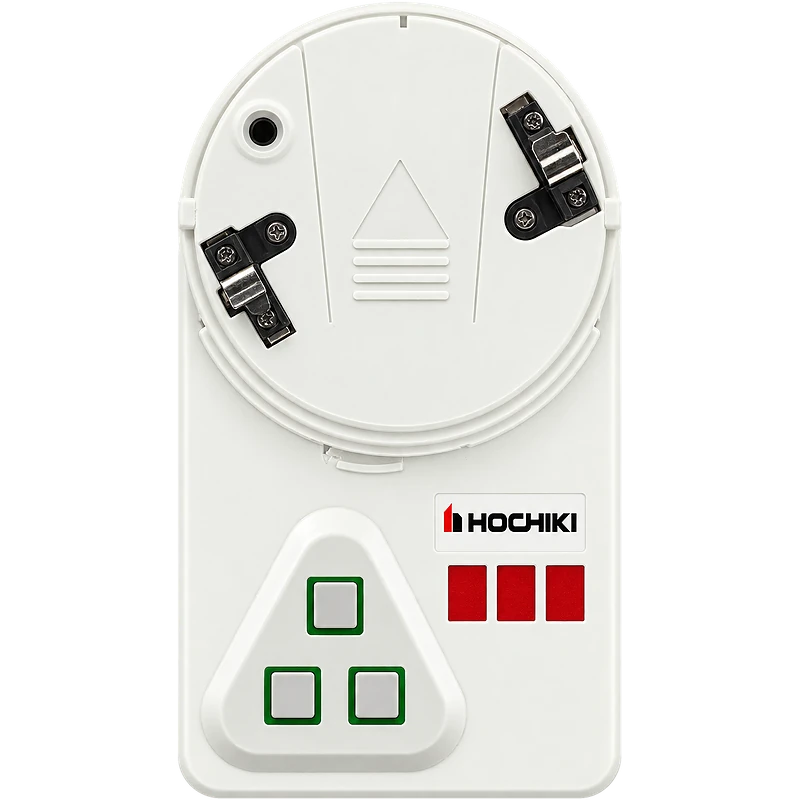

Hochiki TCH-B200 ESP Device Address Programmer | 8000 Operations per Battery, Analogue Value Display
£76.40 (inc VAT: £91.68)
You may also need


Key features
- Over 8000 address settings per battery
- Displays live sensor analogue value
- Can disable polling for safe commissioning
Downloads
Summary
The Hochiki TCH-B200 is a hand held address programmer built to set addresses on ESP range sensors and other addressable devices, including wall sounders, mini modules and manual call points (MCPs), with a single PP3 battery good for over 8000 address operations. That kind of capacity matters on a big commissioning job, where swapping batteries mid-way through a floor means lost time and a broken rhythm.
View full overview Show less
For you on site, it means fewer interruptions and a tool you can trust to get through a full day’s addressing without a battery check. The TCH-B200 also reads back the sensor’s analogue value directly on the unit, so you can verify a device is reporting correctly before you move on, rather than waiting until the panel is live.
It also lets you disable polling of sensors, useful when you need to isolate a device during commissioning without pulling it off the loop. Programming leads are sold separately and are matched to the device type you’re addressing.
Features
- 8000+ address settings from one battery – keeps you addressing all day without a battery swap mid-job
- Sensor analogue value display – confirms a device is reading correctly before the panel goes live
- Disable polling of sensors – isolates a device for commissioning without removing it from the loop
- Lightweight, robust ABS case – easy to carry and use one-handed around a site
- Two programming lead options – PL-2 for legacy CHQBS-type call points, PL-3 for Hochiki devices such as HCP-E(SCI) call points
Specifications
Programmer specification
| Ordering Code | TCH-B200 |
|---|---|
| Battery Type | 9 VDC (PP3) |
| Battery Capacity | Over 8000 address operations |
| Operating Temperature Range | -10°C to +50°C |
| Colour / Case Material | White / ABS |
| Weight (Including Battery) | 140 g |
| Dimensions | L160 x D30 x W99.5 mm |
PL-2 programming lead (sold separately)
| Use | Hochiki legacy devices, e.g. CHQBS call points |
|---|---|
| Length | 660 mm |
| Weight | 15 g |
| Connections | 2 x crocodile clips, 2.5 mm jack plug |
PL-3 programming lead (sold separately)
| Use | Hochiki devices, e.g. HCP-E(SCI) call points |
|---|---|
| Length | 700 mm |
| Weight | 10 g |
| Connections | 3 pin Molex, 2.5 mm jack plug |
FAQ
Use the PL-3 lead for Hochiki devices such as HCP-E(SCI) call points, which connects via a 3 pin Molex and 2.5 jack plug. For Hochiki legacy devices such as CHQBS call points, use the PL-2 lead with its crocodile clips and 2.5 jack plug. Both leads are sold separately from the TCH-B200. It runs from a single 9 VDC PP3 battery, which the manufacturer rates for up to 8000 address operations. That’s enough for most full-site commissioning runs without needing a spare on hand. Yes, the TCH-B200 displays the sensor’s analogue value directly on the unit, so you can confirm a device is responding correctly as you address it rather than waiting to check at the fire panel. Disabling polling lets you isolate a sensor during commissioning, which is useful if you need to work on a device without it triggering activity on the loop. The datasheet doesn’t detail the step-by-step procedure, so check the full manual for exact instructions. Yes, alongside the ESP range of sensors it’s designed to address other addressable devices including wall sounders, mini modules and manual call points, using the appropriate programming lead. No, the ALNEN sensor shown fitted to the TCH-B200 in product images is for illustration only and is not supplied with the programmer.Which programming lead do I need for my call points?
What battery does the TCH-B200 use and how long does it last?
Can I check a sensor's reading without going back to the panel?
Why would I need to disable polling of sensors?
Does the TCH-B200 address mini modules and wall sounders as well as sensors?
Is the sensor shown with the unit included?
Downloads
- Datasheet (Adobe PDF)
Additional information
| Weight | 1 kg |
|---|---|
| Device Type | |
| Environment | |
| Protocol |