Apollo XP95 is an addressable fire detection range that includes optical smoke detectors, heat detectors, multisensors, bases and other loop devices. When choosing a new detector or replacing an existing one, match the exact detector model, base and control-panel support rather than relying on appearance alone.
Updated 9 November 2026: detector models, base options and compatibility information checked against Apollo’s current product information.
Jump to: detector comparison | panel compatibility | bases and addressing | ordering checklist | products | FAQs
Apollo XP95 smoke, heat and multisensor detectors compared
The table covers standard models relevant to our range. Apollo also lists specialist variants, so check the complete part number on the existing detector and the replacement specification. The application examples below help explain the differences; the system designer must select the detector for the actual fire risk and environment.
| Detector and Apollo reference | What it detects | Selection point |
|---|---|---|
| XP95 optical smoke detector 55000-600APO (white) | Smoke, using photoelectric light scattering. | Apollo identifies slow-burning, smouldering fires and applications including escape routes. Check normal dust, steam and smoke conditions before selection. |
| XP95 heat detector, A2S 55000-400APO | Temperature, using a thermistor; Apollo specifies an alarm at 55°C for this model. | Apollo lists dirty or normally smoky environments among its applications. It is a heat detector, not a smoke detector. |
| XP95 heat detector, CS 55000-401APO | Temperature, with a different heat classification from the A2S model. | Do not apply the 55000-400APO’s 55°C description to every XP95 heat detector. Confirm the specified heat class before ordering. |
| XP95 optical/heat multisensor 55000-885APO | Combines optical smoke and temperature sensing. | Apollo lists both fast- and slow-burning fire response. Suitability still depends on the location and supported system configuration. |
Manufacturer references: optical detector, A2S heat detector, CS heat detector and optical/heat multisensor. These pages include the relevant specifications and available downloads.
Which fire alarm panels support XP95?
XP95 devices communicate with a compatible addressable control panel. Apollo works with panel manufacturers that incorporate its protocols and tests panels before issuing compatibility certificates. Its compatible-panels information explains this approach and the backwards/forwards compatibility of its protocol family.
For an actual installation, check the panel model, loop-card/protocol option, software version and exact device support against the panel manufacturer’s documentation. A matching brand, an addressable label or a physically fitting detector is not enough to establish the complete installation’s suitability. Confirm any device-count, loop-load, programming and cause-and-effect requirements before replacement.
XP95 detector bases and XPERT addressing
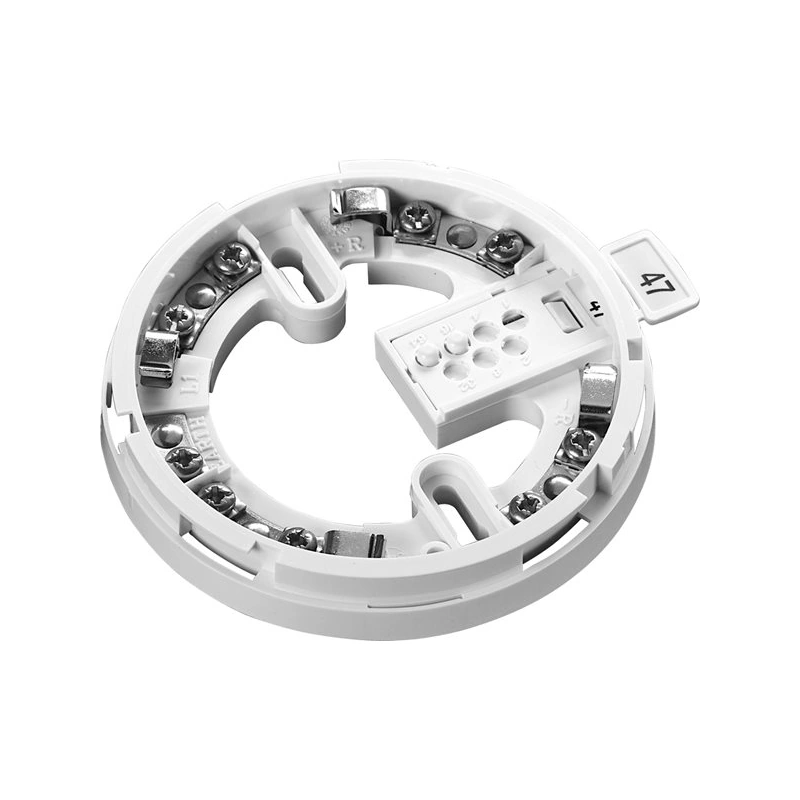
The base has its own part number and function. Apollo identifies its XPERT 7 base, 45681-210APO, for the XP95 and Discovery detector ranges and supplies an XPERT address card with it. Use the correct coding chart and installation instructions for that base, and check the address against the panel’s device schedule during commissioning.
| Base | Purpose | What to check |
|---|---|---|
| XPERT 7 standard base 45681-210APO (white) | Standard detector mounting and XPERT addressing. | Apollo identifies it for XP95 and Discovery detectors. Match the required base and colour variant. |
| XPERT 7 deep base 45681-209APO | Increased depth for side cable entry and surface wiring. | A mounting option for XP95 and Discovery products; confirm the wiring arrangement. |
| XPERT 7 isolating base 45681-284APO | Adds short-circuit isolation. | Check the exact device/base combination and isolator loading in the system design. |
| Separate isolator base 45681-211APO | Mounts the separate 55000-720 isolator. | Apollo says this base only accepts that isolator. It is not a substitute for a detector mounting base. |
Apollo references: standard base, deep base, isolating base and separate isolator base. Specialist, intrinsically safe and other base arrangements require their own instructions and compatibility checks.
What do XP95 isolators do?
Apollo’s 55000-720APO isolator limits the effect of a loop short circuit to the section between isolators. Once the short circuit is removed, it restores power and data to that section automatically.
For the 45681-284APO isolating base, Apollo states up to 20 detectors or their equivalent load between isolating bases. That wording matters: it is not a universal allowance for 20 arbitrary devices of any type. The designer must check the relevant isolator instructions, device loads and panel requirements.
Manual call points for an XP95 system
The current Apollo Intelligent Manual Call Point, SA5900-908, has a resettable operating element and built-in isolator. Apollo lists SA5900-908APO as compatible with XP95, Discovery and CoreProtocol and certified to EN 54-11 and EN 54-17. Confirm the correct model, mounting arrangement and panel support; older call-point part numbers and accessories should be checked individually.
XP95 ordering and replacement checklist
- Record the existing detector’s full part number, including any colour or specialist variant.
- Identify the panel and loop protocol. Check the relevant supported-device list and software requirements.
- Confirm the detector type and heat class. Preserve the intended detection performance rather than choosing by price or shape.
- Read the base part number. Distinguish standard, deep, isolating and separate-isolator bases.
- Check the environment. Include temperature, condensation, dust and normal smoke or steam sources in the selection.
- Check addressing and loop loading. Use the correct XPERT instructions, device schedule and design calculations.
- Plan the work and testing. Arrange any impairment controls, programming, functional checks and records with the responsible engineer.
- Order the required head, base and accessories. Check what is supplied with each product before ordering.
Shop XP95 detectors and mounting bases
Use the current product options below after completing the compatibility checks. The optical detector and standard mounting base have colour choices; the table above identifies their white versions. These are individual products, so check the base requirements separately.


Apollo XP95 FAQs
Is Apollo XP95 addressable or conventional?
XP95 is an addressable range. Use it with the supported addressable panel and loop configuration; do not assume it can replace a conventional detector simply because both are wired devices.
Which base is used with an XP95 optical detector?
Apollo identifies the XPERT 7 standard base 45681-210APO for its XP95 and Discovery detector ranges. Deep, isolating and specialist arrangements need the appropriate base selection. Check the existing base and complete system requirements before ordering.
How is an XP95 detector addressed?
The standard XPERT 7 base uses an XPERT address card. Follow the coding chart for that exact card/base and verify the resulting address at the panel during commissioning. Other loop devices may use different addressing arrangements.
Do all XP95 heat detectors operate at 55°C?
No. Apollo specifies 55°C for the 55000-400APO A2S model discussed here, while 55000-401APO is a CS-class detector. Match the exact heat class and part number; an analogue alarm value in a specification is not automatically a temperature in degrees Celsius.
Can I replace an older ionisation detector with an optical detector or multisensor?
Apollo describes its XP95 multisensor as an alternative to ionisation detection, but that does not establish an automatic replacement for every installation. Have the engineer check the original detector, intended fire response, base, panel support and any programming changes before selecting a replacement.
Where can I find XP95 datasheets and wiring instructions?
Use the downloads on the exact product page and Apollo’s model-specific technical information linked above. Match the document to the detector, base or call point you are installing. A detector guide cannot replace the panel manual or the installation instructions for each device.
Need help identifying a part? Contact Huvo with the panel model, detector and base references, or browse our addressable detectors.