Updated 6 November 2026: Reviewed against current London Fire Brigade and government guidance, with CommanderEDGE LFX product details checked against CheckFire’s manufacturer information.
Lithium-ion battery fires can develop rapidly and produce toxic smoke. Understanding the warning signs, using the correct charger and keeping charging areas clear of escape routes are practical ways to reduce the risk.
This guide focuses on rechargeable lithium-ion batteries used in devices such as phones, laptops, cordless tools, e-bikes and e-scooters. It explains the risks, a charging and storage checklist, disposal routes and what to check when specifying a lithium-ion battery fire extinguisher.
If a battery starts smoking or catches fire: get out immediately, raise the alarm and call 999. London Fire Brigade’s e-bike and e-scooter advice says not to attempt to tackle the fire yourself.
Why do lithium-ion batteries catch fire?
Lithium-ion batteries store energy in a compact, rechargeable form. A damaged, faulty or incorrectly charged battery can fail. London Fire Brigade identifies these as important risks for e-bikes and e-scooters; using compatible, well-maintained equipment and following the device manufacturer’s instructions matters.
Thermal runaway is an uncontrolled self-heating process. Heat from a failing cell can affect neighbouring cells, allowing the incident to escalate. Flames are only part of the hazard: batteries can release flammable gases, and a fire can produce toxic smoke and spread to nearby materials. CheckFire’s thermal runaway explanation describes the chain reaction and the importance of cooling in its specialist extinguisher design.
This does not mean every lithium-ion battery will catch fire. The practical question is whether the particular battery, charger, use and charging location introduce avoidable risks. Do not use one temperature threshold, battery size or general “lithium” label to judge every device.
Lithium-ion battery warning signs
London Fire Brigade’s warning-sign guidance highlights:
- Unusual or excessive heat.
- Swelling, bulging or changes in shape.
- Leaks, lumps or physical damage to the casing.
- Hissing or cracking noises.
- A strong chemical smell.
Stop using a battery showing signs of failure. Seek instructions from the manufacturer or retailer; do not continue charging it to see whether the problem goes away. Do not approach or handle a smoking or burning battery: follow the emergency advice above.
Lithium battery fire risks and practical controls
| Situation | Why it matters | Practical control |
|---|---|---|
| Wrong or incompatible charger | Incorrect charging can cause overheating and battery failure. | Use the charger supplied with the battery or recommended by its manufacturer; buy replacements from a reputable supplier. |
| Dropped, damaged or swollen battery | Damage or a change in shape can indicate a failing battery. | Stop using it and obtain manufacturer or retailer advice. Do not recharge a damaged battery. |
| Charging in a corridor or by an exit | A fire can obstruct the route people need to escape. | Keep storage and charging away from main through-routes and exits. |
| Charging unattended or during sleep | Warning signs or an incident may go unnoticed. | For e-bikes and e-scooters, follow fire-service advice never to charge unattended or while asleep. |
| Heat build-up or extreme temperatures | Heat and unsuitable conditions can affect battery safety. | Follow the manufacturer’s temperature limits, let batteries cool after use and charge on a hard, flat surface. |
| Batteries in rubbish or mixed recycling | Damage during collection or processing can cause a fire. | Use an appropriate battery or electrical-product collection route; check arrangements before disposal. |
| Unplanned storage at work | Several devices or packs can introduce risks that were not covered by the original arrangements. | Review the fire risk assessment, locations, charging rules, staff information and emergency plan. |
Charging and storage checklist
The following draws on London Fire Brigade’s e-bike and e-scooter charging guidance. Apply the exact device manufacturer’s instructions to phones, tools, laptops and other equipment.
- Confirm compatibility. Match the battery and charger to the device. Do not assume a connector that fits means a charger is suitable.
- Inspect before use. Check for damage and warning signs. Do not use or charge a battery that has been dropped or damaged without appropriate manufacturer advice.
- Choose the location. Charge on a hard, flat surface where heat can dissipate, away from escape routes. Keep exits and circulation routes clear.
- Allow cooling. Let a battery cool after use before charging, and protect it from extreme heat or cold.
- Plan supervision. Do not leave an e-bike or e-scooter battery charging unattended or while you sleep. Unplug the charger when charging is complete.
- Plan warning and escape. London Fire Brigade advises a smoke alarm in the area used for charging at home. At work, check detection and escape arrangements through the building’s fire risk assessment.
- Manage replacements. Buy batteries and chargers from reputable suppliers and check manufacturer safety alerts or recalls.
- Arrange end-of-life handling. Identify an appropriate collection route before a battery becomes damaged or unwanted. Make sure staff and occupants know what to do.
Lithium-ion batteries in workplaces and managed buildings
Look beyond the obvious e-bike: workplaces may also contain battery-powered scanners, laptops, tools and other rechargeable equipment. Record what is present, where it is stored and charged, and who controls the process.
For premises covered by the Regulatory Reform (Fire Safety) Order 2005, its geographical scope is England and Wales; it is not a single UK-wide fire safety law. GOV.UK says the Responsible Person must carry out and regularly review a fire risk assessment and keep a written record. Scotland and Northern Ireland have separate legislation.
London Fire Brigade’s guidance for landlords, employers and managing agents specifically asks them to consider e-bike and e-scooter storage, communal charging, blocked escape routes and how occupants are told about the risks.
Use that review to agree charging locations, rules for damaged equipment, staff responsibilities, evacuation arrangements and suitable fire precautions. Larger industrial batteries, vehicles and energy-storage installations need their own specialist assessment; advice about a portable extinguisher for a small device should not be extended to them.
How to dispose of lithium-ion batteries safely
Office for Product Safety and Standards guidance says unwanted batteries and electrical products should go to an appropriate collection point rather than household rubbish. Lithium-ion batteries can catch fire if damaged in the waste stream.
Do not put e-bike or e-scooter batteries in ordinary rubbish or mixed-recycling bins. Check your local authority’s arrangements for the relevant battery type and condition. Do not assume that a shop’s small portable-battery collection accepts a large, industrial or damaged pack.
If the battery is built into a device and cannot be removed, follow the electrical-product recycling route rather than trying to dismantle it. For damaged, leaking or swollen batteries, contact the manufacturer, retailer or collection service for instructions before taking them anywhere. Workplace waste arrangements should be checked separately from household services.
CommanderEDGE LFX: what to check before specifying an extinguisher
Prevention, warning and escape come first. An extinguisher purchase does not make a charging area safe or remove the need for a fire risk assessment and training. The public emergency advice above still applies.
CheckFire describes LFX as a fluorine-free, water-based agent that discharges as an endothermic foam, drawing heat from lithium-ion batteries. It is designed for lithium-ion battery fires and also protects against secondary Class A fires in surrounding combustible materials. That is a model-specific product claim, not a guarantee for every battery, installation or incident.
Check the battery chemistry and energy rating, the extinguisher’s stated application limits, temperature range, approvals and instructions with your fire-safety adviser or supplier. A “lithium battery” label alone is not enough to choose equipment.
| LFX example | CheckFire’s published device limit | Product details to check |
|---|---|---|
| 3 litre | Up to 300Wh | Huvo SKU FX-LFX-003-ACF matches the current manufacturer code. The current sheet gives a 13A rating for Class A fires. |
| 6 litre | Up to 600Wh | Huvo lists FX-LI-006-MCF. CheckFire identifies that as the previous code for FX-LFX-006-ACF. Confirm the supplied unit’s markings and instructions when specifying. |
Read the ratings correctly: a Class A rating concerns ordinary combustible materials; it is not a battery-energy rating. CheckFire’s current shared datasheet explicitly excludes the 3-litre model from its NTA 8133 approval statement. Do not assume every size has the same approval or performance.
Both current manufacturer model pages specify an operating range of +5°C to +60°C. These examples are not a general recommendation for outdoor winter storage, every e-bike pack or a large battery installation. A device below the published Wh ceiling still needs a suitability assessment.
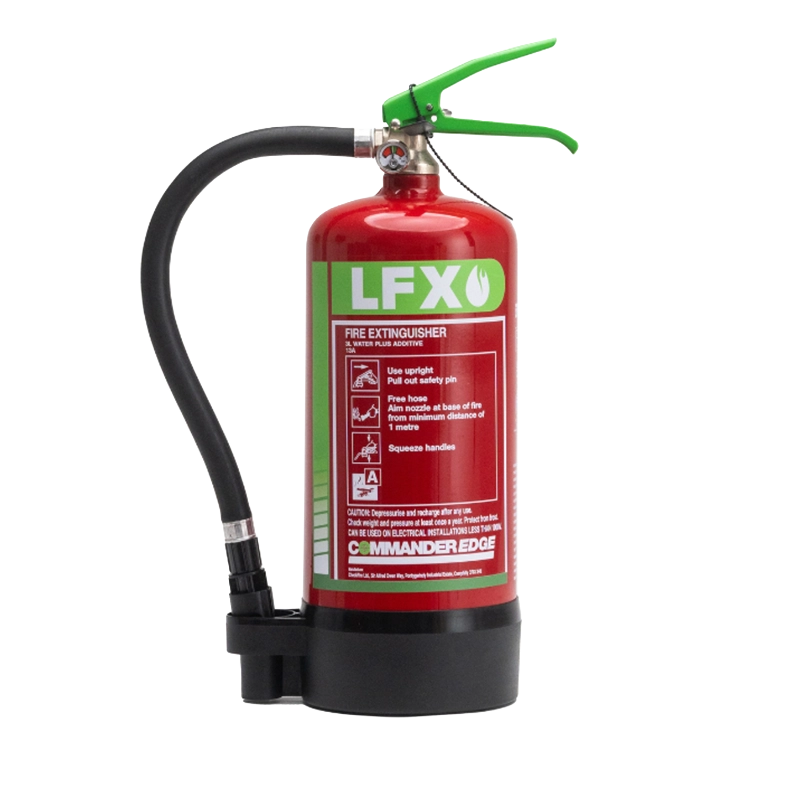
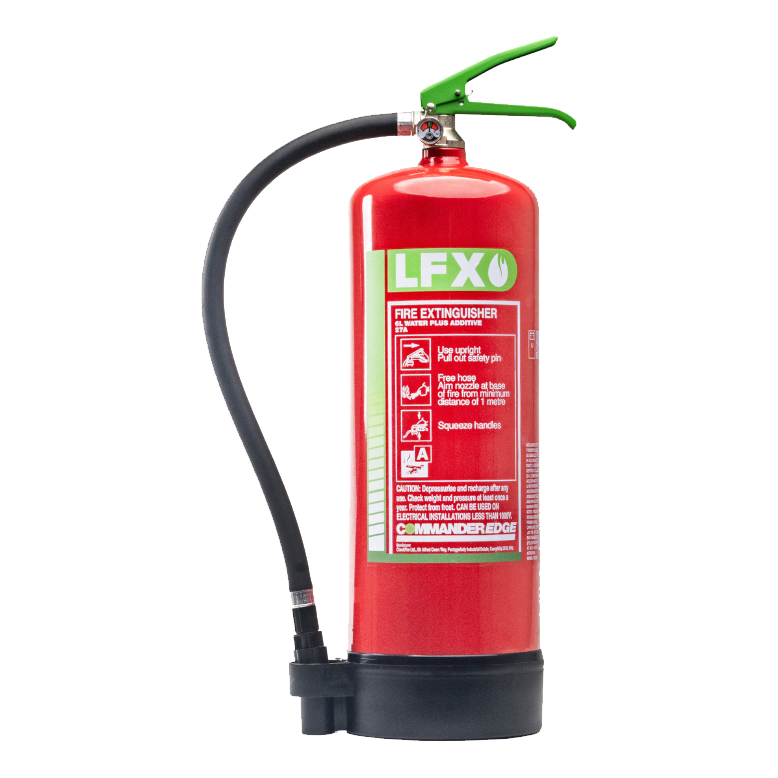
Read the CheckFire LFX datasheet, January 2025 for the current ACF codes and approval footnotes. CheckFire’s current 3-litre and 6-litre model pages give the device limits above and explain the code changes.
You can also browse Huvo’s lithium-battery extinguisher range. Compare exact models and their instructions rather than treating every product in the category as interchangeable.
Lithium battery fire safety FAQs
Do lithium-ion batteries catch fire in normal use?
Many everyday devices use them, but damage, faults or incorrect charging can lead to failure. Follow the manufacturer’s instructions, use a compatible charger and act on warning signs. Avoid treating either “all batteries are dangerous” or “this battery can never fail” as a useful safety rule.
What should I do if a lithium-ion battery starts smoking?
Get out immediately, raise the alarm and call 999. London Fire Brigade’s e-bike and e-scooter guidance says not to tackle the fire yourself. Do not delay escape to collect an extinguisher or move a smoking battery.
Can I charge an e-bike battery overnight?
London Fire Brigade advises never to leave it charging unattended or while asleep. Use the correct charger, follow the manufacturer’s instructions, let the battery cool after use and unplug it when charging is complete.
Are lithium-ion battery fires just ordinary electrical fires?
A failing battery can enter a self-heating chain reaction, while nearby materials can also catch fire. Suitability for use around electrical equipment or a Class A rating does not, on its own, establish lithium-ion battery fire performance. Check the exact model’s battery application and limits.
Does a 600Wh limit mean an extinguisher suits every e-bike?
No. CheckFire publishes up to 600Wh for its 6-litre LFX model, but battery ratings and installation conditions vary. Check the actual pack and the manufacturer’s conditions with a competent fire-safety adviser. Do not extrapolate this to larger packs, vehicles or energy-storage systems.
Can I put an old battery or vape in the recycling bin?
Use the appropriate battery or electrical-product collection service, not ordinary rubbish or mixed recycling. Devices with batteries that cannot be removed, including many vapes, should follow the electrical-product route. Check locally how to handle damaged batteries before transporting them.
Build safety around prevention, warning and escape
Start with compatible equipment, sensible charging arrangements, clear escape routes and a plan for damaged or unwanted batteries. Keep the fire risk assessment and training up to date where relevant. Specify specialist equipment against the actual risk, and make sure everyone knows to raise the alarm and leave if a battery begins smoking or burning.
Sources reviewed: London Fire Brigade’s warning-sign, charging, emergency, disposal and Responsible Person guidance; GOV.UK/OPSS recycling and fire risk assessment guidance; the Fire Safety Order’s extent; and CheckFire’s current exact-model pages and linked LFX datasheet.