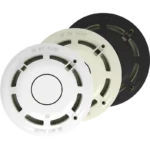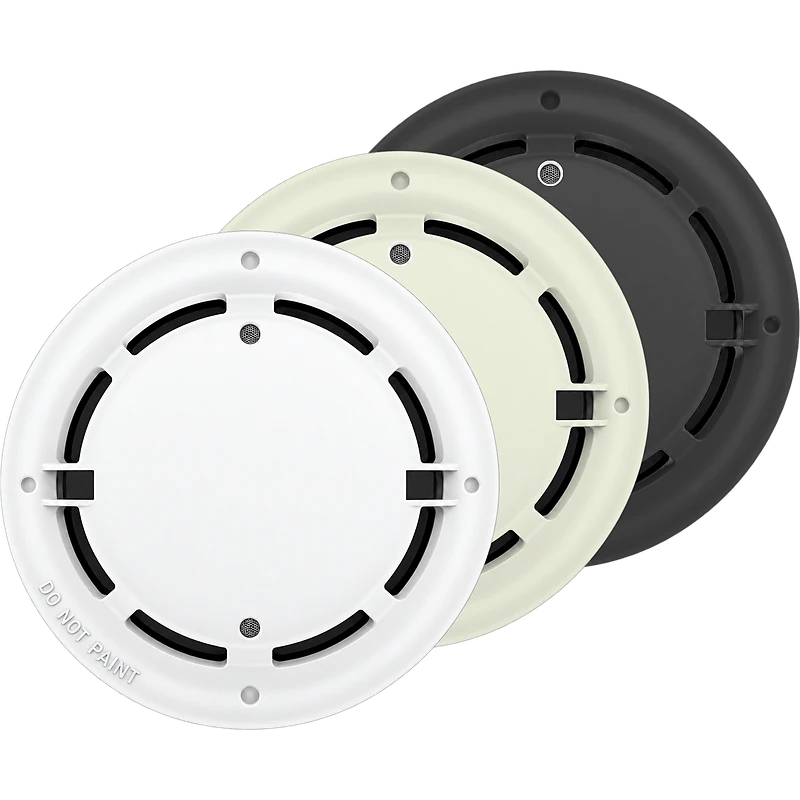

Hochiki ALN-EN ESP Analogue Addressable Photoelectric Smoke Sensor | High Performance Chamber Technology
You may also need
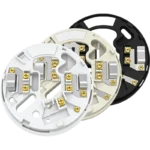
Key features
- High Performance Chamber reduces false alarms
- Dedicated photoelectric sensing, not multi-mode
- Twin LEDs give 360° status view
Downloads
Summary
The Hochiki ALN-EN is an analogue addressable photoelectric smoke sensor built around Hochiki’s High Performance Chamber Technology, which raises the detection threshold to improve the signal-to-noise ratio and cuts false alarms without needing a separate ionisation sensor for most applications.
View full overview Show less
For you on site, that means fewer nuisance call-outs and fewer awkward conversations with clients about unwanted alarms, a real advantage when specifying detection for areas prone to transient smoke or dust. Within Hochiki’s ESP range, the ALN-EN is the dedicated photoelectric option, sitting alongside the ACC-EN multi-sensor, which offers three user-selectable sensing modes; choose the ALN-EN where straightforward optical smoke detection covers the risk and you don’t need mode-switching flexibility.
The chamber itself is removable for cleaning and uses an improved baffle design that lets smoke in while keeping ambient light out, so maintenance visits are quicker and the sensor stays reliable over time. Twin LEDs give 360° visual confirmation of status, glowing green while polling and red in a fire condition, while the control and indicating equipment (CIE) manages its sensitivity, pulsing and LED behaviour remotely over Hochiki’s ESP analogue addressable protocol.
Features
- High Performance Chamber - raises the detection threshold to improve signal-to-noise ratio and cut false alarms without a separate ionisation sensor
- Dedicated photoelectric sensing - straightforward optical detection with no mode selection needed, unlike the ACC-EN multi-sensor in the range
- Removable chamber - lifts out for cleaning without replacing the whole sensor head
- Twin LEDs with 360° viewing - green while polling, red in fire, visible from any angle on site
- Variable sensitivity - panel sets detection level between 2%/m and 4.5%/m to suit the risk
- Locking mechanism - secures the sensor to its base and guards against accidental removal
- Electronically addressed - gives each device individual identification on the ESP analogue addressable loop
- LPCB and VdS approved - certified for use on EN 54 compliant fire detection systems
Video
What does ESP stand for in Hochiki’s sensor range?
ESP stands for Enhanced Systems Protocol, which is Hochiki’s Open Protocol communication platform used in their analogue addressable sensor range.
How many types of sensors are in the ESP sensor range?
There are four types of sensors in the ESP sensor range: optical smoke, heat, smoke and heat multi, and smoke heat and CO multi.
What special application variants are available for the ESP sensors?
Special application variants include marine approved, seal capable, and versions with built-in short circuit isolators.
What colors are the ESP sensors and bases available in?
The sensors and bases are available in ivory, white, or black.
How is sensor addressing achieved for ESP sensors?
Sensor addressing is achieved electronically using a TCH B200 programmer, and the address is stored in the sensor.
What is the detection principle used in the optical smoke sensors?
The optical smoke sensors use a backscatter detection principle, where light reflected off smoke particles is detected.
What sensing elements are used inside the heat and multi-sensors?
Thermistors are used as sensing elements inside the heat and multi-sensors to detect heat changes.
What additional sensing element does the newest multi-sensor, the ACD, feature?
The ACD features a CO sensing element that detects carbon monoxide released at early stages of a smouldering fire.
How can the fire threshold of ESP sensors be adjusted?
The fire threshold can be adjusted to increase or decrease sensitivity based on percent obscuration per meter for optical sensors or temperature for heat sensors, either at the fire alarm control panel or using programming software.
What is drift compensation in ESP sensors?
Drift compensation is a feature that allows the sensor electronics to shift the fire threshold level and baseline to maintain optimum performance if the sensor chamber and optics become contaminated over time.
What bases do most ESP sensors fit onto?
Most ESP sensors fit onto the standard electronics-free base YBN-R3, while sensors with short circuit isolators require the YB-VR4 base.
How do sounder bases auto-address themselves when combined with ESP sensors?
When combined, the sounder base auto-addresses itself by setting its address to the sensor address plus 127, allowing independent control via the ESP protocol.
FAQ
It’s compatible with the YBN-R/3, YBO-R/SCI, YBO-BS, YBO-BSB2 and YBN-R/3(SCI) bases, with fixing centres from 48mm to 74mm. Check you’re using one of these bases rather than a generic equivalent to keep the locking mechanism and electrical connections working as intended. Choose the ACC-EN multi-sensor where the risk assessment calls for selectable sensing modes, such as environments where both smoke and heat characteristics vary. The ALN-EN is the simpler dedicated photoelectric option, suited to applications where optical smoke detection alone meets the requirement. Hochiki states that the High Performance Chamber in the ALN-EN removes the need for ionisation smoke sensors in the majority of applications, thanks to its increased threshold level and improved signal-to-noise ratio. You should still confirm suitability against the specific fire risk and your design requirements under BS 5839-1. The chamber is removable, so you can take it out for cleaning or replacement rather than swapping the whole sensor head. This is designed to speed up routine maintenance visits compared with a sealed chamber. Pulsing and non-pulsing LED operation, along with sensitivity, is controlled from the control panel, so this depends on your panel supporting these functions over Hochiki’s ESP protocol. Confirm compatibility with the specific control panel before specifying. It operates from 17 to 41VDC, drawing around 120μA in low power mode and 400μA at quiescent, with alarm current around 9.1mA excluding any remote indicator. Size your loop power budget around these figures alongside the rest of your detection devices.Which bases does the ALN-EN work with?
Do I need the ACC-EN instead of the ALN-EN?
Can the ALN-EN replace an ionisation smoke sensor?
How do I clean the sensor?
Will the LED pulsing or sensitivity work on any control panel?
What power supply does the ALN-EN need?
Specifications
| Ordering Code | ALN-EN (Ivory), ALN-EN(WHT) (White), ALN-EN(BLK) (Black) |
|---|---|
| Operating Voltage | 17-41 VDC |
| Low Power Mode | 120 μA (typ.) |
| Quiescent Current | 400 μA (typ.) |
| Alarm Current | 9.1 mA (excluding remote indicator, controlled by CIE) |
| Transmission Method | Digital communications using ESP |
| Operating Temperature Range | -10°C to +50°C |
| Operating Humidity | 95% RH, non-condensing (at 40°C) |
| Sensitivity Levels | 2%/m to 4.5%/m |
| Storage Temperature Range | -30°C to +60°C |
| Storage Humidity | Less than 80% RH at 60°C |
| Colour / Case Material | Ivory, White or Black / ABS |
| Weight | 95 g |
| Diameter / Height | 100 mm / 45 mm |
| Compatible Bases | YBN-R/3, YBO-R/SCI, YBO-BS, YBO-BSB2, YBN-R/3(SCI) |
| Base Fixing Centres | 48-74 mm |
| Wind Exposure | 1 ± 0.2 m/s (Ref EN54-7) |
| Ingress Protection Rating | IP42 |
| Approvals | LPCB, VdS |
Downloads
- Datasheet (Adobe PDF)
More Detector products from Hochiki
ESP FIREbeam XTRA Analogue Addressable Beam Smoke Detector
£420.99 (inc VAT: £505.19)
Hochiki ACB-EW | ESP Analogue Waterproof Multi Heat Sensor | User Selectable Sensing Modes, IP67 Rated
£56.29 (inc VAT: £67.55)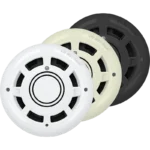
Hochiki ACC-EN | ESP Analogue Addressable Multi-Sensor | User Selectable Sensing Modes, Easy Maintenance Chamber
Hochiki ACD-EN Addressable Multi-Sensor | Smoke, Heat & CO Detector
£83.14