Updated 6 November 2026: Reviewed against current Fire Safety Stick model, maintenance and safety documentation. This guide compares the FSS50 and FSS100 and explains what to check before choosing or replacing fire-fighting equipment.
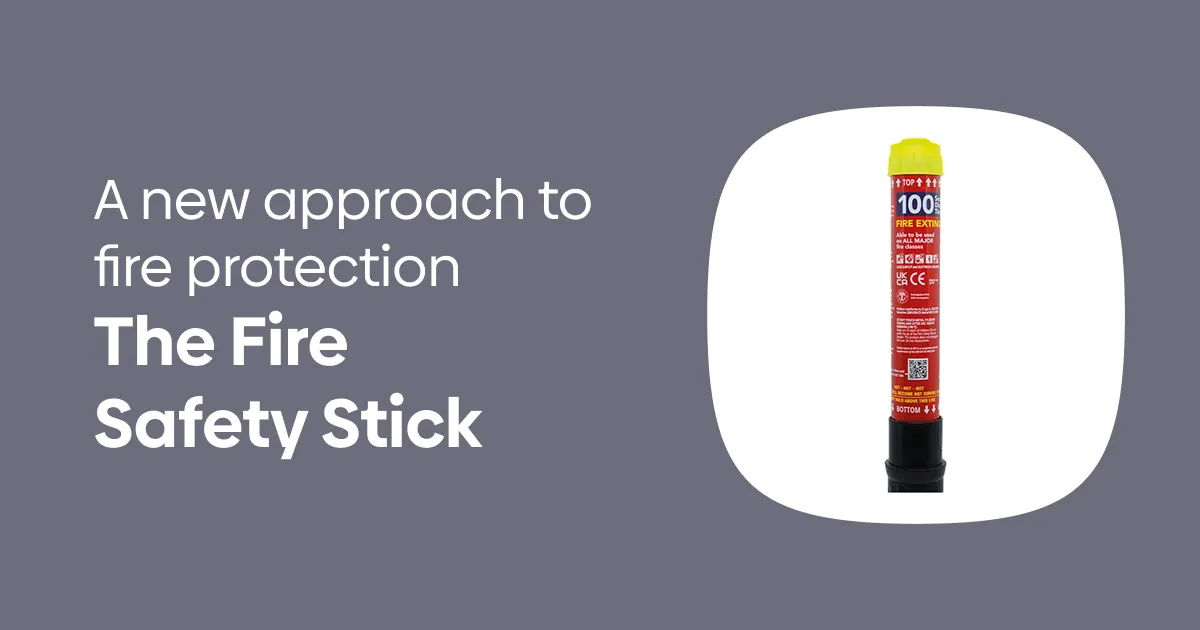
The Fire Safety Stick is a compact, non-pressurised aerosol fire-suppression device. Its low weight and advertised 50- or 100-second discharge make it an option worth considering, but choosing one requires more than comparing discharge times.
Here we explain how the two sizes differ, how Standard, Utility and PRO packs are described by the supplier, and the practical questions to ask when comparing a Fire Safety Stick with a conventional extinguisher.
Fire safety comes first: prioritise raising the alarm and a safe escape. Do not delay leaving a developing fire to collect equipment, and call 999 from a safe place. Read the product instructions before an emergency; a buying guide is not practical fire-fighting training.
What is a Fire Safety Stick?
A Fire Safety Stick contains a solid extinguishing charge rather than a pressurised liquid or powder supply. When activated, it produces an aerosol intended to suppress a small, early-stage fire. The manufacturer’s safety data sheet describes the discharge as potassium-salt particles, nitrogen and water vapour.
It is a manually activated, single-use device. Its compact form is useful where storage space and weight matter, but it should still be accessible, correctly secured and selected for the actual risk.
Fire Safety Stick FSS50 vs FSS100
The two sizes use the same suppression technology. The main published differences are discharge duration, size and weight. The figures below come from the supplier’s model guide, overall-dimensions page and 50/100-second comparison.
| Detail | FSS50 | FSS100 |
|---|---|---|
| Advertised discharge duration | 50 seconds | 100 seconds |
| Published approximate weight | 215g | 365g |
| Overall length, including cap and striker | 275mm | 335mm |
| Maximum diameter | 34mm | 40mm |
| Huvo product code | FSS50 | FSS100 |
| Selection consideration | Smaller and lighter where space is limited. | Longer advertised discharge in a larger, heavier unit. |
A longer discharge does not establish a bigger fire rating or a suitable room size. Both products still need to be assessed against the type of fire, location, instructions and any applicable requirements. Discharge figures describe the models; they do not guarantee the outcome of an incident.
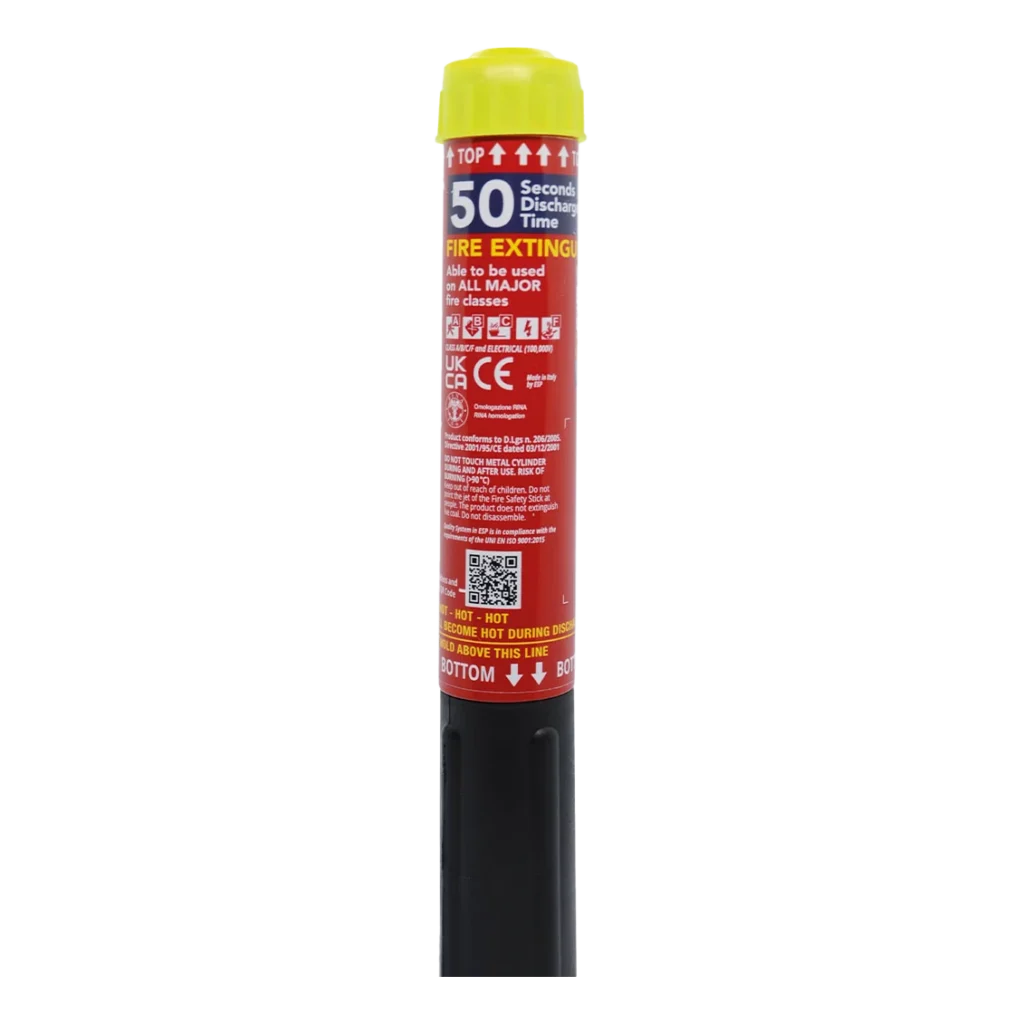
FSS50: the smaller option
The FSS50 is the lighter, shorter model. It may be worth considering where mounting space is constrained and the selected application is suitable for the device.
Before choosing the FSS50
Check the complete mounted dimensions, access to the unit and the appropriate pack/accessories. A compact device hidden behind other stored items will be difficult to reach when needed.
FSS100: the longer-discharge option
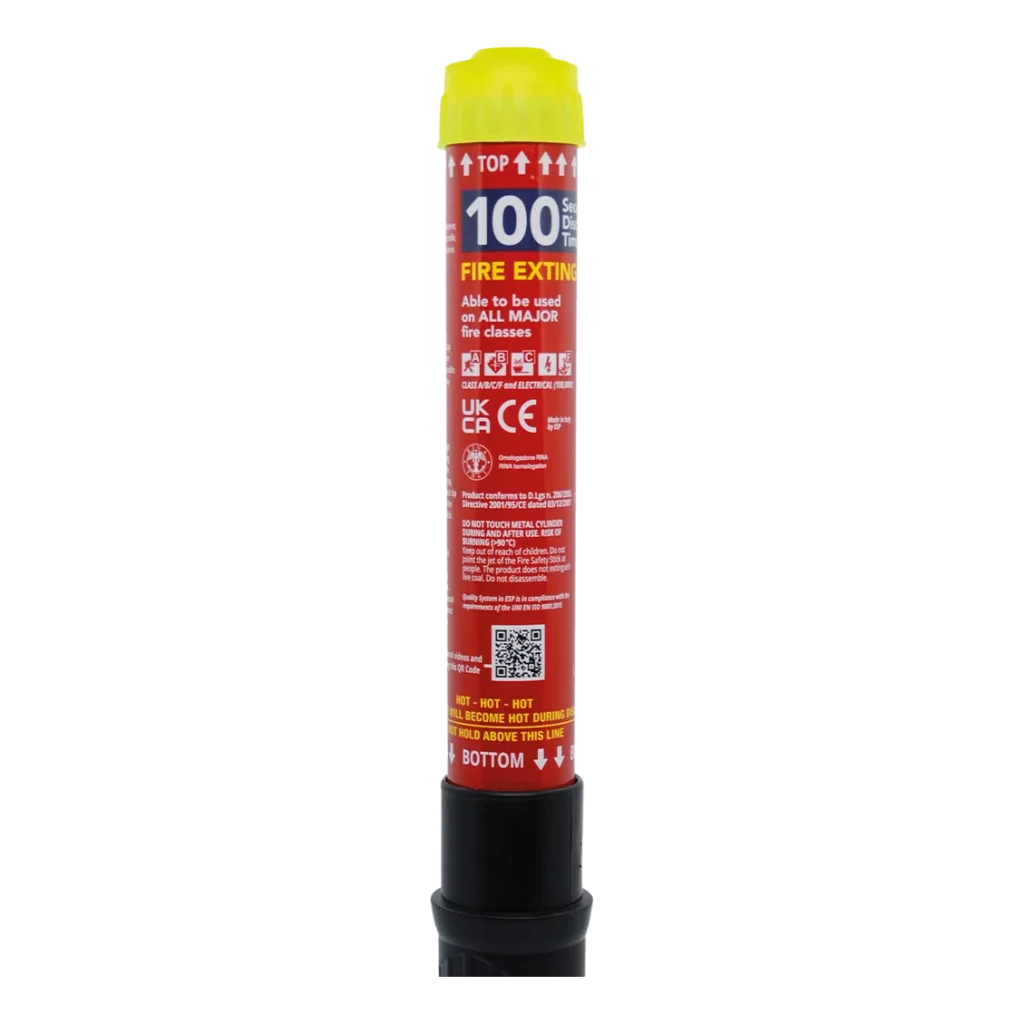
The FSS100 is advertised to discharge for 100 seconds. Its additional duration can be relevant to a selection decision, but it should not be treated as permission to tackle a larger or developing fire.
Before choosing the FSS100
Allow for its longer body, additional weight and mounting requirements. Confirm suitability for the intended environment instead of choosing solely because the discharge lasts twice as long.
Fire Safety Stick vs conventional fire extinguisher
There is no single “traditional extinguisher” specification. Water, foam, powder, CO2 and wet-chemical models have different applications, ratings, precautions and maintenance arrangements. Compare the particular products you are considering.
| Question | Fire Safety Stick | Conventional extinguisher |
|---|---|---|
| How is the agent stored? | Solid charge in a non-pressurised device, producing an aerosol on activation. | Varies by model and agent; many use a pressurised cylinder. |
| How portable is it? | Supplier lists approximately 215g for FSS50 and 365g for FSS100. | Check the full operating weight and dimensions of the exact model. |
| What does discharge time tell me? | The advertised 50/100-second duration is one specification, not proof of suitability for every fire. | Discharge time also varies. Check the fire rating and application rather than comparing seconds alone. |
| What maintenance is needed? | Supplier specifies visual inspections during its stated shelf life; commercial checks should be recorded. | Follow the model’s inspection, servicing, refill and replacement requirements. These differ across products. |
| What about residue and exposure? | Low-residue aerosol, with ventilation and exposure precautions in its safety data sheet. | Clean-up and exposure precautions depend on the agent and the incident. |
| Can I replace existing equipment? | Requires checking the risk assessment, application, scheme and insurer requirements; not an automatic substitution. | Existing provision also needs to match the premises, risk and applicable requirements. |
| What happens after use? | Single-use device; replace after activation and follow disposal advice. | Some models can be professionally refilled; others require replacement. Check the exact product. |
Residue and clean-up
The supplier promotes the stick as leaving no corrosive mess. Its safety data sheet describes residue after use as negligible. That is more precise than promising no particles, no cleaning or no possible damage in every situation. Follow the safety sheet’s ventilation and clean-up precautions.
Servicing and visual inspections
The supplier says the Fire Safety Stick does not need annual servicing during its stated shelf life. It still specifies visual maintenance checks, including condition, caps, striker and signs of previous discharge. Commercial installations should have documented inspections and the appropriate mounting, signage and accessories.
“No annual servicing” does not mean “fit it and forget it”. Check the product regularly according to its instructions, record checks where required, and seek supplier advice if it is damaged or suspect.
Shelf life
The supplier states a minimum 15-year shelf life, subject to keeping the device in suitable condition and following its storage and maintenance instructions. This is not a promise that every damaged, incorrectly stored or previously activated unit remains usable for that period.
Size, weight and mounting
Use the full-device dimensions in the table when planning storage. Secure the unit where it is easy to identify and reach without reaching across a likely fire source. The supplier specifically advises against mounting above a hob. Moving vehicles and equipment need suitable mounting for vibration and movement.
Condition and storage
Non-pressurised construction does not remove the need to check for damage. Follow the storage instructions, keep the unit dry and inspect the casing and activation components. Do not test-activate a unit you intend to keep for an emergency.
Standard, Utility and PRO packs
The supplier’s current model guide describes three pack variations, each offered with 50- or 100-second devices:
- Standard: described for fixed, stationary installations, with one mounting clip.
- Utility: recommended by the supplier for moving vehicles/mobile equipment, with two clips and a factory-fitted anti-tamper tag.
- PRO: adds inspection/maintenance labels and record-keeping support to the enhanced mounting arrangement, for managed commercial uses.
Confirm what is supplied with your order. Huvo’s FSS50 and FSS100 listings identify the discharge models; the model code alone does not confirm every accessory or PRO installation provision.
Fire types, test claims and replacement limits
The supplier describes Fire Safety Stick applications across Class A, B, C and F fires and electrical equipment, and publishes a certification and test-document library. Read the scope of the actual document and the exact unit’s instructions. A supplier’s list of fire types, a laboratory test condition and compliance with a particular installation requirement are different questions.
Do not assume that one device removes the need for correctly selected extinguishers, fire detection, escape arrangements or training. GOV.UK’s workplace guidance says equipment needs depend on the premises and that equipment must be properly installed, tested and maintained, with staff trained where necessary.
For workplaces, the supplier’s own replacement guidance describes an assessment-led process and an updated fire-safety strategy, with insurer requirements considered. Consult a competent fire-safety adviser before changing existing provision; PRO accessories do not themselves make a premises compliant.
Boats: the supplier’s Boat Safety Scheme guidance explicitly says the stick is not recognised as a replacement for the required conventional extinguishers under that scheme. Keep the required equipment and confirm current requirements with your scheme examiner.
Aerosol safety and enclosed spaces
Do not interpret “non-toxic” marketing as an instruction to breathe the aerosol or remain in a smoke-filled space. The manufacturer’s safety data sheet, revision 14 dated 11 November 2024, includes skin/eye irritation precautions and instructs users to ventilate after discharge and not enter an enclosure before it has been fully vented.
The sheet also warns that the discharge end is hot. Follow the unit’s handling instructions and keep clear of the discharge. Fire smoke presents its own hazards; leave if conditions are unsafe and seek emergency help rather than relying on a product claim to remain inside.
Fire Safety Stick buying and inspection checklist
- Define the use: identify the likely fire risks and whether this is a home, vehicle, boat or managed workplace.
- Check requirements: review the fire risk assessment and any insurer, vehicle, marine or scheme requirements before changing existing equipment.
- Choose the discharge model: compare FSS50/FSS100 duration, size and weight without equating longer discharge with a larger fire rating.
- Confirm the pack: ask which clips, tags, labels, signs and inspection records are included or needed.
- Plan accessible mounting: account for movement/vibration and avoid a position that requires reaching across the fire.
- Read the instructions and safety sheet: understand handling, single-use operation, exposure precautions and the limits of the application before an emergency.
- Keep it in condition: inspect and maintain it as directed, and record commercial checks appropriately. Replace suspect or used units according to supplier advice.
- Keep the escape plan: equipment should support the wider safety arrangements, never delay raising the alarm or leaving.
Fire Safety Stick FAQs
Are Fire Safety Sticks any good?
They offer a compact, lightweight, non-pressurised option with long advertised discharge times. Whether one is a good choice depends on the risk, instructions, mounting and applicable requirements. This is a specification-based buying guide, not a hands-on comparative fire test.
Should I choose the 50-second or 100-second version?
FSS50 is smaller and lighter; FSS100 has a longer advertised discharge. Check available mounting space and the intended application. Neither duration alone establishes suitability for a larger fire or a particular room.
Can a Fire Safety Stick replace my existing extinguishers?
Do not make an automatic substitution. Workplace provision needs an appropriate assessment and consideration of insurer and installation requirements. For boats subject to BSS, the supplier says required conventional extinguishers must still be carried.
Does service-free mean no checks?
No. The supplier requires visual maintenance checks and provides inspection guidance. Managed commercial uses also need suitable records and installation arrangements.
Is it safe to breathe the discharge?
Avoid deliberate exposure. The manufacturer’s safety sheet includes irritation precautions and requires ventilation after discharge. Do not remain in a hazardous atmosphere or re-enter a fire scene because the product is described as non-toxic.
Does it prevent every fire from re-igniting?
No universal guarantee should be assumed. Suppressing visible flames does not establish that heat, fuel or the cause of the fire has been removed. Follow emergency-service advice and do not assume the incident is safe simply because the flames have stopped.
Can it be refilled or reused?
It is a single-use device. After activation, arrange replacement and follow the manufacturer’s disposal guidance; do not return it to service as an unused unit.
Choose the device as part of your fire-safety plan
Compare the exact model, pack and instructions against your needs. If you are unsure about an installation or replacing existing equipment, ask a competent adviser before ordering. You can browse Huvo’s Fire Safety Stick range or review our wider extinguisher selection.
Sources reviewed: the supplier’s model, dimensions, maintenance, certification, workplace and boat guidance; ESP International’s safety data sheet; and GOV.UK workplace equipment guidance. Source statements are qualified by model and application; no independent hands-on testing is claimed.