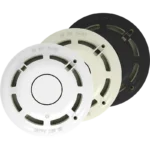
Hochiki ACD-EN ESP Addressable Multi Sensor with CO | Smoke, Heat & CO, 10-Year CO Sensor Life
£83.14
You may also need
Key features
- Heat, optical and CO sensing elements in one head
- CO Alarm (COHb) facility for life-threatening CO levels
- RI and LED controllable separately on supported panels
Downloads
Summary
The Hochiki ACD-EN is an addressable multi-sensor that combines heat, optical and carbon monoxide (CO) sensing elements in a single low-profile head, with its CO element doing double duty as a standalone CO alarm (COHb) for life-threatening CO levels, not just as a fire cue.
View full overview Show less
That combination means you can cover smoke, heat and CO risk in plant rooms, kitchens or sleeping areas with one device instead of specifying separate detectors, cutting the number of heads to install, wire and commission on site.
It runs on the ESP loop, drawing power and addressing from the panel, with a programmable fire threshold so you can tune sensitivity to the environment rather than live with a fixed setting. A 10 year CO sensor life and 24 EN approved modes of operation give you flexibility across different ESP-compatible panel configurations, though the exact modes available depend on the panel in use.
Features
- Heat, optical and CO sensing elements – covers three detection principles from a single ceiling-mounted device
- CO Alarm (COHb) facility – the CO element can trigger a dedicated CO alarm as well as support fire detection
- 10 year CO sensor life – fewer sensor replacements over the system’s working life, dependent on how it’s used
- Programmable fire threshold level – tune sensitivity to the space to help manage unwanted alarms
- RI and LED controllable separately – wire the remote indicator and LED independently where the panel supports it
- 2 colour LED – green during polling, red on fire, for a quick visual status check on site
- 24 EN approved modes of operation – configure the sensor to suit different ESP panel setups
- Low profile design – sits discreetly against the ceiling once fitted to a compatible base
- EN 54 and CEA approved – certified to EN 54-5, EN 54-7, EN 54-26, EN 54-29, EN 54-30, EN 54-31 and CEA 4021
Video
What is the ACD multi-sensor and what does it detect?
The ACD is a multi-sensor developed for the adjustable ESP sensor range that detects smoke, heat, and carbon monoxide (CO).
How does the ACD help in early fire detection?
The ACD uses CO detection to assist with very early detection of smouldering fires, which release CO gas before visible smoke or flames appear.
What is the purpose of the SMART algorithm in the ACD?
The SMART (Suitable Moving Average Time) algorithm reduces false alarms by automatically adjusting the sensitivity of the optical sensing element based on the environment, learning from multiple samples over time.
How does the ACD monitor for carbon monoxide poisoning?
The ACD has modes that monitor for both sudden high exposure and prolonged exposure to CO, recognizing the threat of carboxyhemoglobin toxic poisoning (carbon monoxide poisoning).
How many operating modes does the ACD have and how can they be changed?
The ACD has 24 operating modes. Modes can be changed easily through the control panel menu by selecting a mode button, applying, and submitting the change.
What do the letters and symbols in the ACD mode strings represent?
Letters represent detection types: S for smoke, FT for fixed temperature heat, ROR for rate of rise heat, CO for carbon monoxide, and COHB for carbon monoxide toxicity. The plus symbol denotes the primary detection element, and the forward slash denotes an element enhancing the primary element.
Can a supporting sensing element generate an alarm by itself?
No, a supporting sensing element cannot generate an alarm by itself; it only confirms the fire decision made by the primary sensing element.
What tools are available to help installers select the correct ACD mode?
There is a Mode Selector tool called the ACD Spinner for quick guidance and a detailed mode guide booklet explaining the modes, the SMART algorithm, and recommended applications.
What protocol does the ACD operate on and what are the benefits?
The ACD operates on Hochiki’s ESP open protocol, providing robust and reliable communication and giving specifiers, installers, and end users an open choice on system design, installation, and maintenance.
FAQ
The ACD-EN is designed to match the ESP range, but the 24 modes of operation and the separate RI/LED control depend on the specific panel’s compatibility. Confirm with the panel manufacturer or Hochiki documentation before specifying it on a job. It’s compatible with the YBN-R/3, YBN-R/3(SCI), YBO-BS and YBO-BSB2 bases, so you can match it to whichever base type is already standardised on your installs. No, the ACD-EN does not support sleep mode, so factor its quiescent and polled current into loop current budgets as a continuously active device. Use the quiescent current of 410 μA typical plus the polled loop current of 22 mA ± 20% for normal loading, and allow for the 40 mA surge for 50 ms and 30 mA maximum consumption when calculating worst-case loop loading with remote indicators or LEDs active. Yes, the RI and LED can be controlled separately where the connected panel supports this feature, each drawing its own current (8.0 mA and 9.1 mA respectively). Check panel documentation to confirm this mode is available before wiring it that way. Its CO sensing element can detect life-threatening CO levels and act as a CO alarm (COHb) in addition to supporting fire detection, making it a candidate for spaces with combustion appliance risk. Confirm it meets the specific CO detection requirement for the application, as this is a multi-sensor rather than a dedicated CO detector.Will the ACD-EN work with any ESP panel?
What bases does it fit?
Does it support sleep mode for low-power loop designs?
How should I size the loop cabling for this detector?
Can the remote indicator and LED be wired to operate independently?
Is this suitable for areas needing CO detection, like boiler rooms or kitchens?
Specifications
| Ordering Code | ACD-EN (Ivory), ACD-EN(WHT) (White) |
|---|---|
| Operating Voltage | 17-41 VDC |
| Loop Pulse Voltage | 7-9 VDC |
| Quiescent Current | 410 μA (typ) |
| Loop Current When Polled | 22 mA ± 20% |
| Remote Indicator Current | 8.0 mA ± 20% |
| LED Current | 9.1 mA |
| Surge Current | 40 mA (for 50 ms) |
| Maximum Consumption | 30 mA |
| Operating Temperature Range | -10°C to +50°C (standard sensitivity) |
| Relative Humidity | <95% RH (at 40°C), <80% RH (at 50°C) |
| Storage Temperature Range | -20°C to +50°C |
| Colour / Case Material | Ivory or white / polycarbonate (outer cover) / PC/PS-GF (terminal plate) |
| Weight Without Base | 105 g |
| Diameter / Height | Ø 100 mm / 45 mm (without base) |
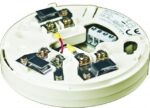
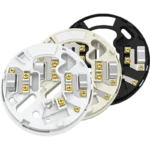
| Compatible Bases | YBN-R/3, YBN-R/3(SCI), YBO-BS, YBO-BSB2 |
| IP Rating | IP42 |
| Sleep Mode | Not supported |
| Approvals | EN 54-5:2017 + A1:2018, EN 54-7:2018, EN 54-26:2015, EN 54-29:2015, EN 54-30:2015, EN 54-31:2015, CEA 4021:2003 |
Downloads
- Datasheet (Adobe PDF)
- Mode Selector Guide (Adobe PDF)
Additional information
| Weight | 0.11 kg |
|---|---|
| Detection Type | |
| Device Type | |
| Environment | |
| Protocol | |
| System Type | |
| Colour |
More Detector products from Hochiki
Hochiki ACC-EN | ESP Analogue Addressable Multi-Sensor | User Selectable Sensing Modes, Easy Maintenance Chamber
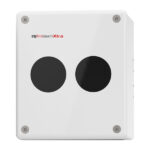
ESP FIREbeam XTRA Analogue Addressable Beam Smoke Detector
£420.99 (inc VAT: £505.19)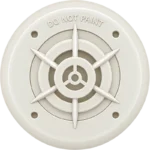
Hochiki ACB-EW | ESP Analogue Waterproof Multi Heat Sensor | User Selectable Sensing Modes, IP67 Rated
£56.29 (inc VAT: £67.55)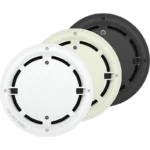
Hochiki ALN-EN | ESP Analogue Addressable Photoelectric Smoke Sensor | High Performance Chamber Technology