A good moment to look at your clips
Amendment 4 to the Wiring Regulations took effect on 15/10/2026. It’s now the only version of BS 7671 that counts, so every new job and every certificate you sign from here on is measured against it.
Most of the attention has gone on the big new chapters. But for fire and security installers, the thing most likely to catch you out is something far more basic: what’s holding the cable to the wall.
The core rule is the same one that’s been in the book since 2018: cables have to be fixed so they won’t come down early in a fire, anywhere in the building, and plastic clips or ties on their own don’t count where cable is clipped direct to a surface or hung under tray. It’s there for a grim reason: firefighters have died after getting tangled in cables that dropped from melted fixings.
What Amendment 4 adds is a note spelling out why. The point of the regulation is to stop collapsed cabling blocking evacuation, rescue or firefighters’ access. It isn’t about keeping the circuit working through a fire; that’s the job of the cable itself and the system standards that sit alongside it.
In practice that makes the requirement harder to argue with. It applies to every cable, not just the life-safety ones, and a fire-resistant cable held up with plastic P-clips is an easy spot for an inspector and an easy fail.
Metal clips, without the faff
Everyone in the trade knows the answer is metal fixings. Everyone also knows why they get skipped: a metal saddle, a plug and a screw at every fixing point, hundreds of times along a corridor, is slow work, especially up a ladder.
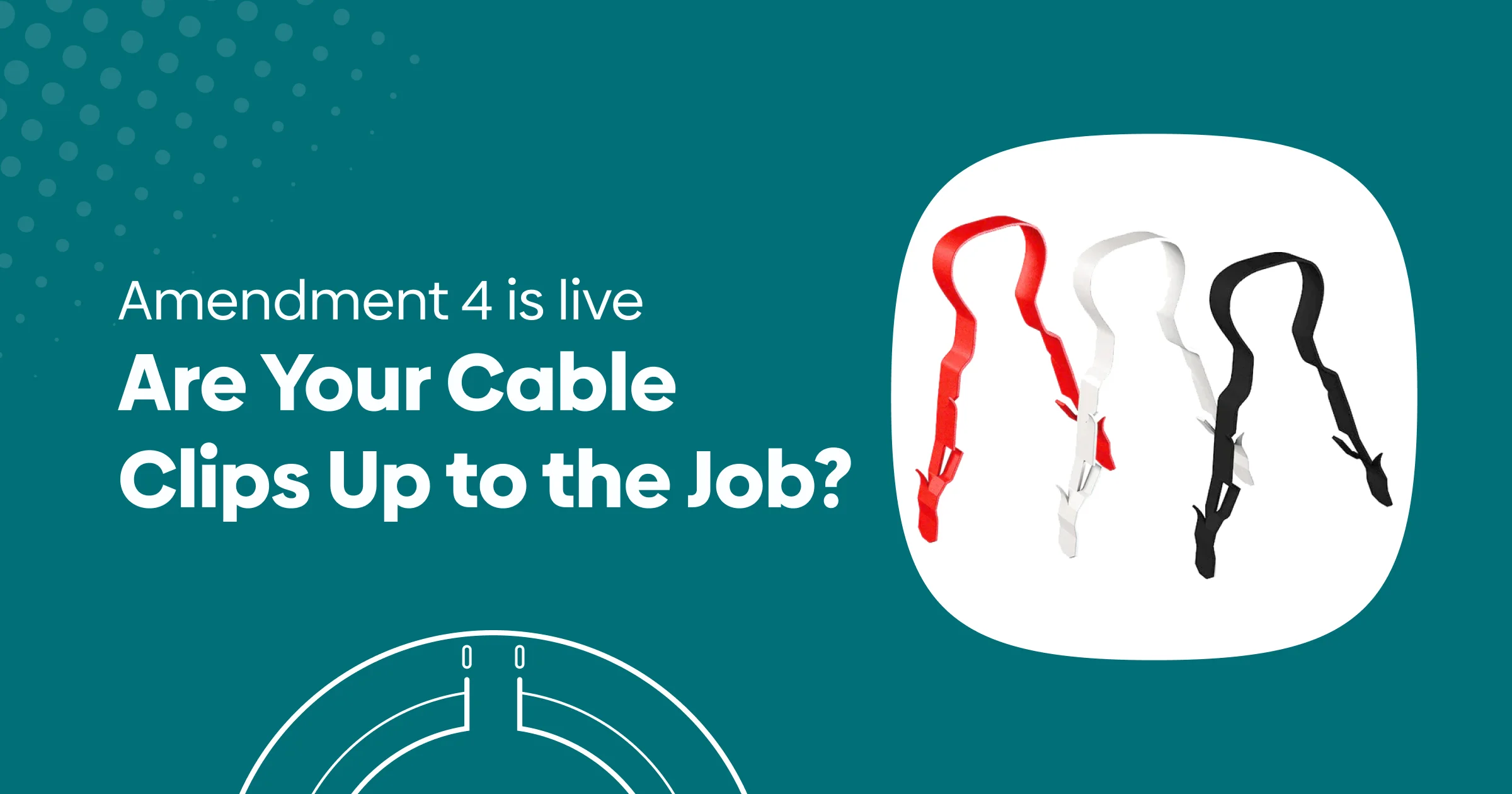
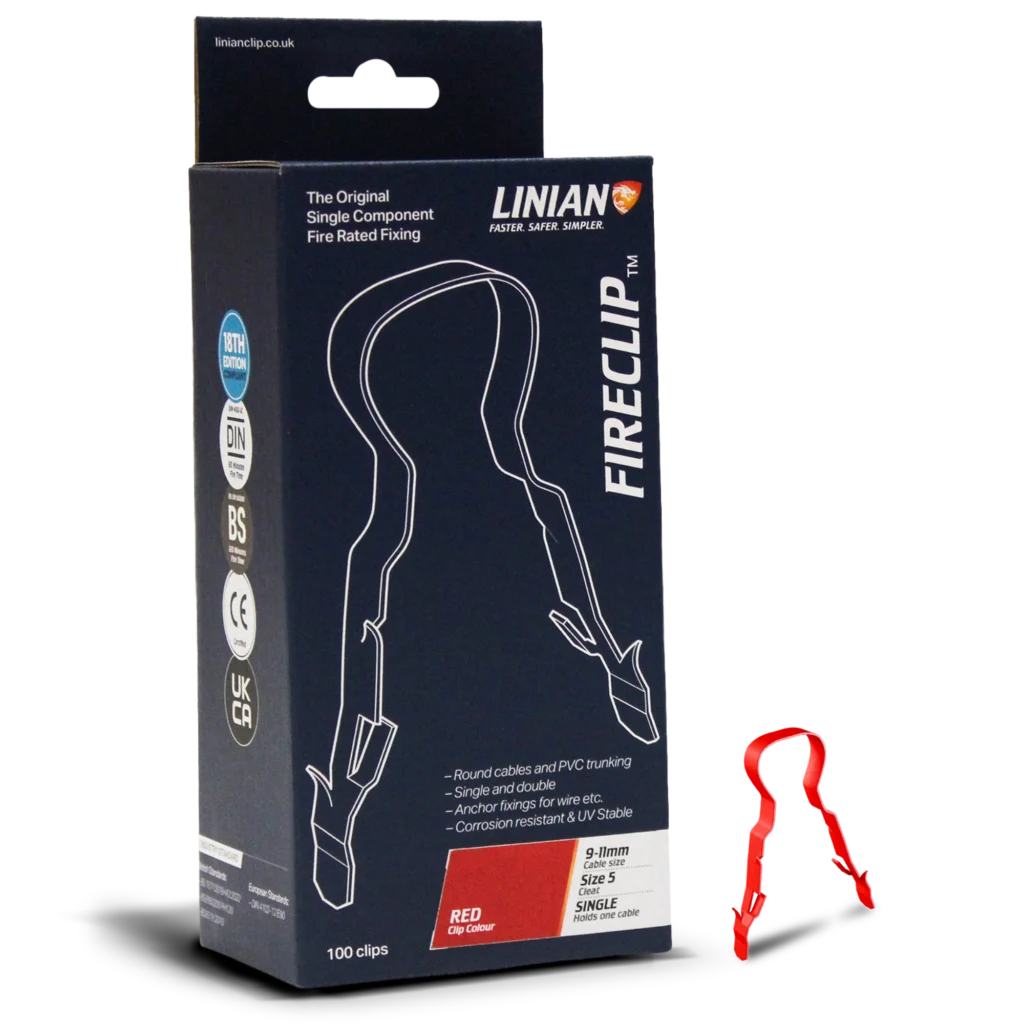
That’s the problem the LINIAN FireClip solves. It’s a single piece of metal. Drill the hole, push the clip in, and the cable is held. No plug, no screw, no washer, no screwdriver. One hand does it, which matters when the other hand is on the ladder.
An independent time-and-motion study put it at around 70% quicker to fit than metal P-clips. On a run with a few hundred fixings, that’s the difference between finishing today and coming back tomorrow.
And because it’s solid metal rather than a plastic saddle with a fixing through it, there’s nothing to melt and nothing to drop. There’s no certified test for fire-rated fixings yet (BEAMA is working on one), so LINIAN had the clip tested independently by Exova Warringtonfire using the principles of BS EN 50200, the same 120-minute test duration applied to enhanced-grade fire-resistant cable. It stayed in place and kept supporting the cable for the full two hours at over 800°C, with the mechanical shock the test calls for. It’s also corrosion resistant and UV stable, so it’s fine outdoors or in damp plant rooms.
What you’d actually order
FireClips come in single and double versions, so you can run one cable or a pair from the same fixing. Three sizes cover standard fire-resistant cable from 1.0 mm² up to 4.0 mm²:
- 4–6 mm (single only) for smaller-diameter cable and flex
- 6–8 mm for 1.0 and 1.5 mm² 2-core
- 9–11 mm for 2.5 and 4.0 mm² 2-core, and for enhanced-grade cable
Cable diameters vary by manufacturer, so check the outside diameter of the cable you’re using. They’re sold in packs of 100 in red, white or black. If you’re not sure which size suits the cable you’re using, send us the cable datasheet and our team will tell you.

The rest of the LINIAN range
The same push-fit idea runs across the whole range, which means one way of fixing for most of what goes on the wall:
- SuperClip for conduit, armoured, SWA and grouped cables
- T&E Clip for flat twin and earth
- NanoClip for fibre and small diameter cables
- Cable Tray Clip, a reusable clip for tray
One thing to get right
If a job started under the old edition, finish it under the old edition; inspectors want consistency within a project, not a switch halfway through. For anything you design or certify from now on, assume Amendment 4 and put metal fixings in the spec from day one. LINIAN FireClips let you do that without adding a day to the programme.
Browse the LINIAN range, or call us on 01792 983 170 if you want a hand sizing clips for a job.