


Carbon Monoxide Alarm Guide UK – Symptoms, Requirements and What to Do
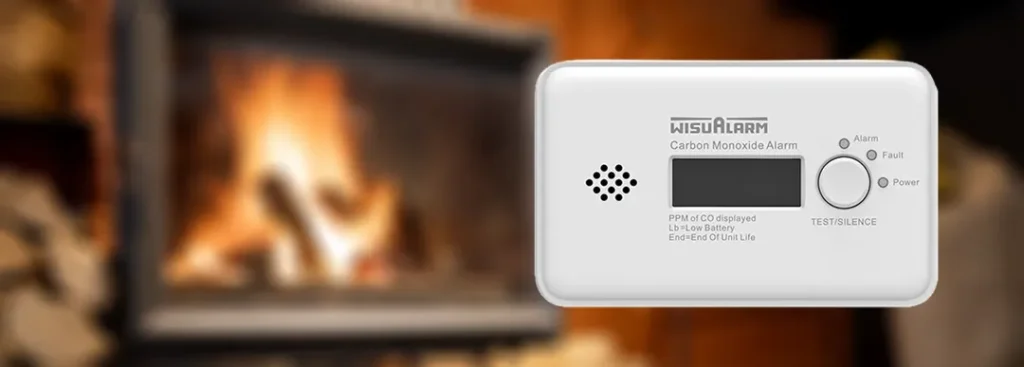
Carbon monoxide is one of the most dangerous substances found in the home. It cannot be seen, smelled or tasted. It produces no visible smoke and gives no immediate warning of its presence. By the time occupants realise something is wrong, they may already be seriously affected.
Carbon monoxide poisoning is estimated to cause dozens of accidental deaths in the UK every year, with hundreds more people requiring hospital treatment. Many additional cases go undiagnosed because the symptoms are so easily confused with other common illnesses.
The good news is that carbon monoxide poisoning is almost entirely preventable. A properly installed and maintained carbon monoxide alarm provides the early warning that can make the difference between life and death.
This guide explains what carbon monoxide is, why it is so dangerous, how to recognise the symptoms of poisoning, what the legal requirements are for UK homes and rental properties and how to choose and position the right alarm for your property.
Huvo has been supplying carbon monoxide and fire alarm systems to UK homes and businesses since 2012.
Find the Right Fire Alarm System
Start System FinderWhat is carbon monoxide and why is it dangerous?
Carbon monoxide is a gas produced by the incomplete combustion of fuels including gas, oil, wood, coal and other solid fuels. When a fuel-burning appliance is working correctly and has adequate ventilation, combustion is complete and carbon monoxide is not produced in dangerous quantities. When an appliance is faulty, poorly maintained or starved of oxygen, incomplete combustion occurs and carbon monoxide is released.
Common sources of carbon monoxide in the home include gas boilers, gas cookers, oil boilers, wood-burning stoves, open fires, solid fuel appliances and portable generators. Even appliances that appear to be working normally can produce dangerous levels of CO if they have not been serviced regularly or if flues or ventilation have become blocked.
Carbon monoxide is dangerous because it binds to haemoglobin in the blood far more readily than oxygen, preventing the body from absorbing the oxygen it needs to function. At low concentrations it causes headaches, dizziness and nausea. At higher concentrations it causes confusion, loss of consciousness and death.
Because the gas itself produces no sensory warning, people can be overcome without any awareness of what is happening to them.
This is why a carbon monoxide alarm is not simply a useful precaution. For any home with fuel-burning appliances it is an essential piece of safety equipment.
Symptoms of carbon monoxide poisoning
Recognising the symptoms of carbon monoxide poisoning can save your life. The most important thing to understand is that CO poisoning symptoms are frequently mistaken for flu or food poisoning, leading people to stay in the affected property and continue to be exposed.
Key symptoms to be aware of include:
- Headaches
- Dizziness
- Nausea
- Shortness of breath
- Confusion
- Tiredness
- Chest pain
- Loss of consciousness in serious cases

There are two important differences between CO poisoning and flu that can help you identify the source of your symptoms. First, flu typically causes a high temperature, while CO poisoning does not. Second, and most critically, if your symptoms improve when you leave the property and return when you go back inside, carbon monoxide should be suspected immediately.
If more than one person in the property is experiencing symptoms at the same time, this is a further strong indicator of CO exposure. Pets may also show signs of illness before humans as they are often more sensitive to low-level exposure.
If you suspect carbon monoxide poisoning, do not wait for your alarm to sound. Get out of the property immediately, get fresh air and seek medical attention. Tell the doctor or paramedic that you suspect carbon monoxide poisoning so the correct treatment can be given quickly.
What to do if your CO alarm sounds
If your carbon monoxide alarm activates, act immediately. Do not assume it is a false alarm.
Get everyone out of the property straight away, including pets. Leave doors open as you go to help ventilate the property but do not waste time. Get outside and into fresh air as quickly as possible.
Do not go back inside the property until it has been checked and declared safe by a qualified engineer or the emergency services.
Call the Gas Emergency Service on 0800 111 999 if you have a gas appliance. If you have oil or solid fuel appliances, contact your fuel supplier or a registered engineer. If anyone in the property is feeling unwell, call 999 immediately.
Do not use any fuel-burning appliances in the property until the source of the carbon monoxide has been identified and the fault has been repaired by a qualified engineer.
Keep your alarm installed and working. Once the emergency has passed, check that your alarm is functioning correctly and replace it if it has reached the end of its service life.
What CO alarms do
Carbon monoxide alarms continuously monitor the air in a room for the presence of carbon monoxide gas. When CO is detected at levels that could be harmful, the alarm activates to warn occupants.
Unlike smoke alarms which respond to visible particles in the air, CO alarms use an electrochemical sensor to detect the presence of carbon monoxide at concentrations that are invisible to human senses. This makes them the only reliable way to detect a CO leak before levels become dangerous.
Modern CO alarms can be standalone battery-powered units, mains-powered units with battery backup or combination alarms that detect both smoke and carbon monoxide.
All alarms sold in the UK should comply with BS EN 50291, the British and European standard for carbon monoxide detectors for domestic use.
In wireless RF interlinked systems, CO alarms can be connected with smoke and heat alarms so that when the CO alarm activates, all alarms in the property sound together. This ensures occupants are alerted wherever they are in the property.
When CO alarms are required in the UK
CO alarm requirements vary depending on property type, location and the appliances present. The following sections explain the current requirements for England, Scotland and Wales.
England
In England, the Smoke and Carbon Monoxide Alarm (Amendment) Regulations 2022 require landlords to install a carbon monoxide alarm in any room used as living accommodation that contains a fixed combustion appliance, excluding gas cookers.
In practice this means that any room containing a gas boiler, gas fire, oil boiler, wood-burning stove, open fire or solid fuel appliance requires a CO alarm. Gas cookers are the only appliance currently excluded from the requirement, though a CO alarm is strongly recommended in any kitchen with a gas cooker given the risks associated with incomplete combustion.
Owner-occupied properties are not covered by this specific legislation, but CO alarms are strongly recommended for any home with fuel-burning appliances regardless of tenure.
Scotland
Scotland is the only part of the UK where CO alarm requirements apply to owner-occupied homes as well as rental properties.
Since February 2022, all homes in Scotland whether owner-occupied or rented are required to have a carbon monoxide alarm in any room containing a carbon-fuelled appliance or a flue. This applies to gas boilers, oil boilers, gas fires, wood-burning stoves, open fires and solid fuel appliances, as well as any room through which a flue passes. Gas appliances used solely for cooking are excluded.
Wales
In Wales, the Renting Homes (Fitness for Human Habitation) (Wales) Regulations 2022, which came into force in December 2022, require landlords to install CO alarms in rooms containing any fixed combustion appliance. The requirement in Wales extends to gas cookers as well as boilers and solid fuel appliances.
Requirements for owner-occupied properties in Wales follow a similar position to England. CO alarms are not currently a legal requirement for homeowners, but are strongly recommended.
Owner-occupied properties in England and Wales
While CO alarms are not currently a legal requirement for owner-occupied properties in England and Wales, any home with a gas boiler, gas fire, wood-burning stove, oil boiler or solid fuel appliance is at risk of carbon monoxide exposure.
The cost of a CO alarm is minimal compared to the risk of not having one. We strongly recommend that every home with a fuel-burning appliance installs a carbon monoxide alarm regardless of any legal requirement.
Where to install CO alarms
Carbon monoxide alarms should be installed in every room that contains a fuel-burning appliance. This includes rooms with gas boilers, oil boilers, wood-burning stoves, open fires and solid fuel appliances.
Because carbon monoxide circulates through the air rather than rising like smoke, CO alarms are most effective when positioned at breathing height, approximately one to one and a half metres from the floor, on a wall near the appliance but not directly next to it.
For properties with fuel-burning appliances in multiple rooms, one alarm should be installed in each room. Our System Finder takes the number of rooms with fuel-burning appliances into account and will recommend the correct number of CO alarms for your property.
It is also worth installing a CO alarm in or near sleeping areas, even if no fuel-burning appliance is present in the bedroom itself. Carbon monoxide can travel through a property and people are most vulnerable to CO poisoning while asleep as they cannot respond to early symptoms.
Get a CO Alarm Recommendation
Start System FinderPositioning guidelines
Carbon monoxide alarms should be installed following manufacturer instructions and in accordance with BS EN 50291.
Key positioning guidelines include:
- Position alarms at breathing height on a wall, typically between one and one and a half metres from the floor.
- Install the alarm within the same room as the fuel-burning appliance.
- Do not install the alarm directly next to or directly above the appliance.
- Avoid areas of poor air circulation where gas may not reach the sensor quickly.
- Where an alarm is also required in a sleeping area, position it where it will be heard clearly by all occupants.
Always follow the specific installation instructions provided with your alarm as requirements can vary between manufacturers and products.
Where not to install CO alarms
Incorrect placement can delay detection or reduce the effectiveness of a CO alarm. Alarms should not be installed in the following locations:
- Directly above or immediately next to a fuel-burning appliance, as high temperatures near the appliance can affect sensor performance.
- In areas exposed to strong draughts or airflow from vents or extractor fans, as this can dilute CO concentrations near the sensor and delay detection.
- Inside enclosed spaces such as cupboards or behind furniture where air circulation is restricted.
- In areas of high humidity such as directly inside bathrooms or shower rooms, unless the alarm is specifically rated for use in humid environments.
- Outside the property or in unheated outbuildings where temperature extremes may affect sensor performance.
CO alarms for landlords

Landlords across the UK have a legal responsibility to ensure carbon monoxide alarms are installed and working in their rental properties where fuel-burning appliances are present.
In England, alarms must be installed in all rooms containing a fixed combustion appliance excluding gas cookers, and must be tested and confirmed as working at the start of each tenancy. In Wales, the requirement extends to gas cookers as well. In Scotland, the requirements apply to all homes regardless of tenure and cover all rooms with fixed combustion appliances or flues.
Failure to comply with CO alarm regulations can result in remedial notices from the local authority, fines and in the case of HMOs, potential impact on licensing. Beyond the legal requirement, the moral responsibility to protect tenants from a silent and potentially lethal hazard is clear.
For landlords managing multiple properties, our System Finder will recommend the correct number of CO alarms based on the number of rooms with fuel-burning appliances in your property.
Landlord Requirements
Landlord Fire Alarm RequirementsChoosing the right CO alarm
When selecting a carbon monoxide alarm, the following factors are worth considering.
Power source
Mains-powered CO alarms with battery backup provide continuous protection without dependence on battery condition. Battery-powered alarms are suitable where mains wiring is not available but require regular battery checks. For rental properties, mains-powered alarms are strongly recommended.
Combination alarms
Combination smoke and CO alarms detect both smoke and carbon monoxide in a single unit. They are a practical solution for rooms where both risks are present, such as a living room with an open fire or wood-burning stove.
Ensure any combination alarm complies with both BS EN 50291 for CO detection and BS EN 14604 for smoke detection.
Interlinking
In wireless RF interlinked systems, CO alarms can be connected with smoke and heat alarms so that the entire system sounds when any alarm activates. This is possible where the CO alarm is part of the same wireless RF range as the smoke and heat alarms.
In hardwired Grade D1 systems, most CO alarms cannot be connected to the hardwired interconnect circuit and should be installed as standalone mains-powered units operating alongside the system.
This is fully compliant with UK regulations as CO alarms are not legally required to be interlinked anywhere in the UK.
Alarm standard
Ensure any CO alarm you purchase complies with BS EN 50291. This is the British and European standard for domestic CO alarms and ensures the alarm has been independently tested to detect carbon monoxide at the concentrations required to protect occupants.
Browse CO Alarms
View Carbon Monoxide AlarmsHow long do CO alarms last?
This is one of the most important and least understood aspects of CO alarm ownership. Unlike smoke alarms which can last up to ten years, carbon monoxide alarms have a significantly shorter service life.
Most CO alarms have a recommended service life of between five and seven years. This is because the electrochemical sensor that detects carbon monoxide degrades over time and eventually loses the ability to detect CO accurately, even if the alarm appears to be functioning normally.
An alarm that has exceeded its service life may not activate when carbon monoxide is present. This is a serious safety risk that many homeowners and landlords are unaware of.
Every CO alarm should display a replacement date on the unit itself. Check the date on your alarm and replace it immediately if it has passed or is approaching its end of life. If you are unsure of the age of an alarm, replace it.
For landlords, checking the replacement date of CO alarms as part of routine property inspections is an important and often overlooked compliance step.
Frequently asked questions
In Scotland, CO alarms are legally required in all homes with a fixed combustion appliance or flue regardless of whether the property is owned or rented. In England, CO alarms are a legal requirement for landlords in rooms containing a fixed combustion appliance excluding gas cookers. In Wales the requirement for landlords extends to gas cookers as well. CO alarms are not currently a legal requirement for owner-occupied properties in England and Wales, but are strongly recommended for any home with a fuel-burning appliance.Do I legally need a carbon monoxide alarm in my home?
In England, any room containing a gas boiler, gas fire, oil boiler, wood-burning stove, open fire or solid fuel appliance requires a CO alarm in rental properties. Gas cookers are currently excluded in England. In Wales the requirement extends to gas cookers. In Scotland, a CO alarm is required in any room with a carbon-fuelled appliance or flue in all homes regardless of tenure.Which appliances require a carbon monoxide alarm?
CO alarms should be installed in every room containing a fuel-burning appliance, positioned at breathing height on a wall approximately one to one and a half metres from the floor. A CO alarm near sleeping areas is also strongly recommended even if no fuel-burning appliance is present in the bedroom itself.Where should I put my carbon monoxide alarm?
Most CO alarms have a recommended service life of five to seven years. After this time the electrochemical sensor degrades and the alarm may no longer detect CO accurately. Always check the replacement date on your alarm and replace it when it reaches the end of its service life.How long do carbon monoxide alarms last?
Yes. Combination alarms that detect both smoke and carbon monoxide are widely available and are a practical solution for rooms where both risks are present. Ensure the alarm complies with both BS EN 50291 for CO detection and BS EN 14604 for smoke detection.Can I use a combination smoke and CO alarm?
Get everyone out of the property immediately, including pets. Leave doors open as you go. Do not go back inside. Call the Gas Emergency Service on 0800 111 999 if you have a gas appliance. If anyone feels unwell, call 999. Do not use any fuel-burning appliances until the source has been identified and repaired by a qualified engineer.What should I do if my CO alarm goes off?
Yes. In England and Wales, a CO alarm is legally required in rooms containing a gas boiler in rental properties. In Scotland the requirement applies to all homes. For owner-occupied properties in England and Wales a CO alarm is not currently a legal requirement but is strongly recommended. A gas boiler is one of the most common sources of carbon monoxide in the home.Do I need a CO alarm if I have a gas boiler?
CO alarms are not legally required to be interlinked anywhere in the UK. In wireless RF interlinked systems, CO alarms can be connected with smoke and heat alarms so that all alarms sound together when any device activates. This is possible where the CO alarm is part of the same wireless RF range, such as the Wisualarm system. In hardwired Grade D1 systems, most CO alarms cannot be connected to the hardwired interconnect circuit and are installed as standalone units alongside the system. Our System Finder will recommend the right approach based on your property and system type.Do CO alarms need to be interlinked with smoke alarms?