


UK Domestic Fire Alarm Requirements – Grades and Regulations
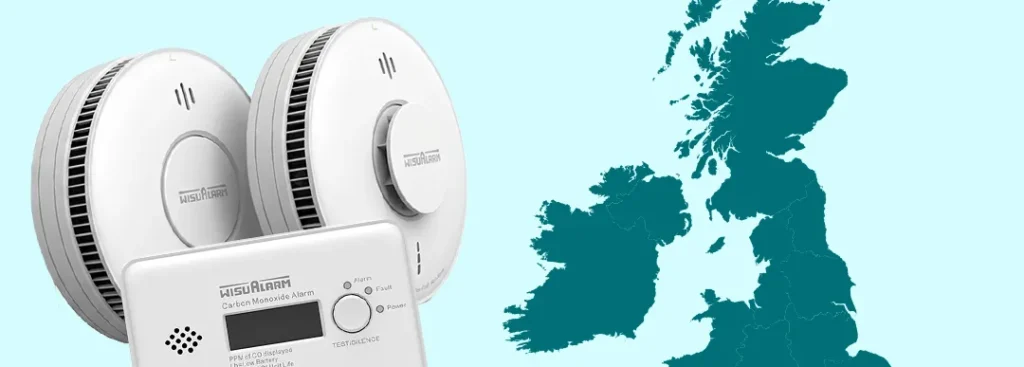
Domestic fire alarm requirements in the UK depend on the type of property, how it is used and where it is located.
Systems are made up of different types of alarms designed to detect specific risks within a property. Smoke alarms are typically installed in escape routes such as hallways and landings. Heat alarms are used in kitchens and other high-risk areas where smoke alarms may cause false alarms. Carbon monoxide alarms detect dangerous gas produced by fuel-burning appliances such as boilers, stoves and fires.
Requirements vary across the UK. In England, smoke alarms are required on each storey of all rental properties under the Smoke and Carbon Monoxide Alarm Regulations 2022, along with a carbon monoxide alarm in any room with a fixed combustion appliance, excluding gas cookers. Scotland has the strictest requirements in the UK; since February 2022, all homes regardless of tenure must have interlinked smoke and heat alarms, plus a carbon monoxide alarm where there is a carbon-fuelled appliance or flue. In Wales, the Renting Homes (Fitness for Human Habitation) Regulations 2022 require rented homes to have mains-powered, interlinked smoke alarms on each storey, plus a carbon monoxide alarm in any room with a gas, oil or solid fuel appliance. Unlike England, this includes rooms with a gas cooker.
Additional requirements apply to specific property types. Private landlords and operators of houses in multiple occupation have additional legal obligations beyond the standard requirements.
If you want a quick answer, use the Fire Alarm System Finder to get a recommended setup for your property in under a minute.
At Huvo, we have been supplying fire alarm systems to UK homes and businesses since 2012.
Find the Right Fire Alarm System
Start System FinderInterlinked fire alarm systems
Modern domestic fire alarm systems are usually interlinked. When one alarm activates, all alarms in the property sound together, ensuring occupants are alerted regardless of where the fire starts.
Interlinked alarms are a legal requirement in all Scottish homes and in rental properties across England and Wales. For owner-occupied properties in England and Wales they are strongly recommended as best practice.
Interconnection can be achieved through hardwired connections or wireless RF modules. Smart gateways can be added to compatible systems to provide remote alerts and app-based monitoring.
Learn More About Interlinked Alarms
View Interconnect ModulesFire alarm grades D1, D2, F1 and F2
Fire alarm grades describe how alarms are powered and maintained.
Grade D1 systems are mains powered with a sealed long-life backup battery. Grade D2 systems are mains powered with a replaceable backup battery. Grade F1 and F2 systems are battery powered, with F1 using sealed batteries and F2 using replaceable batteries.
Battery-powered systems are suitable for owner-occupied properties, but mains-powered Grade D systems are generally recommended for rental properties where long-term reliability and compliance are important. Mains-powered systems are less dependent on occupants remembering to replace batteries and are widely specified by local authorities and letting agents.
Understand Fire Alarm Grades
View Full Grades GuideProtection levels LD1, LD2 and LD3
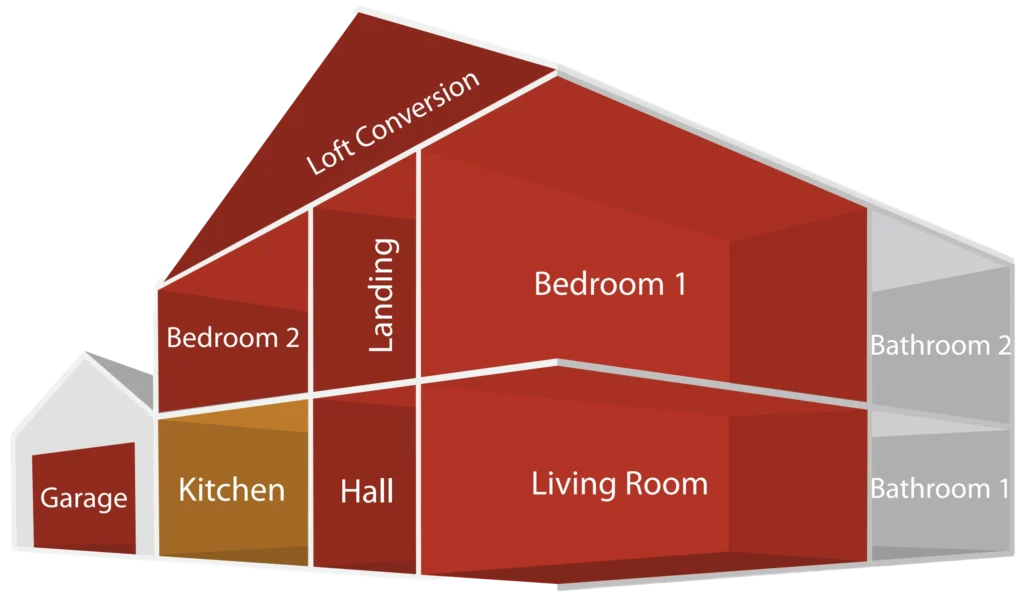
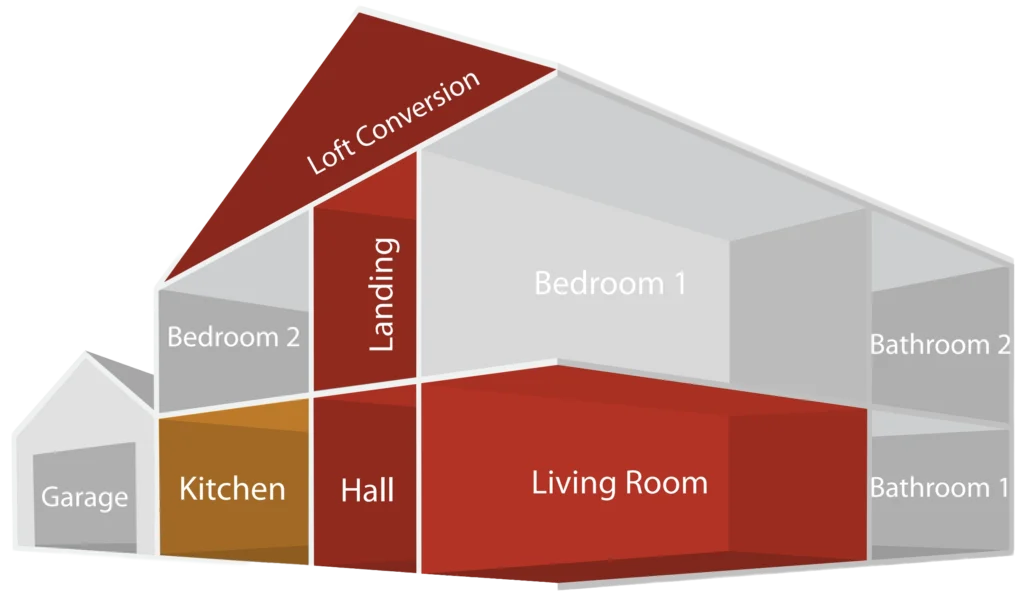
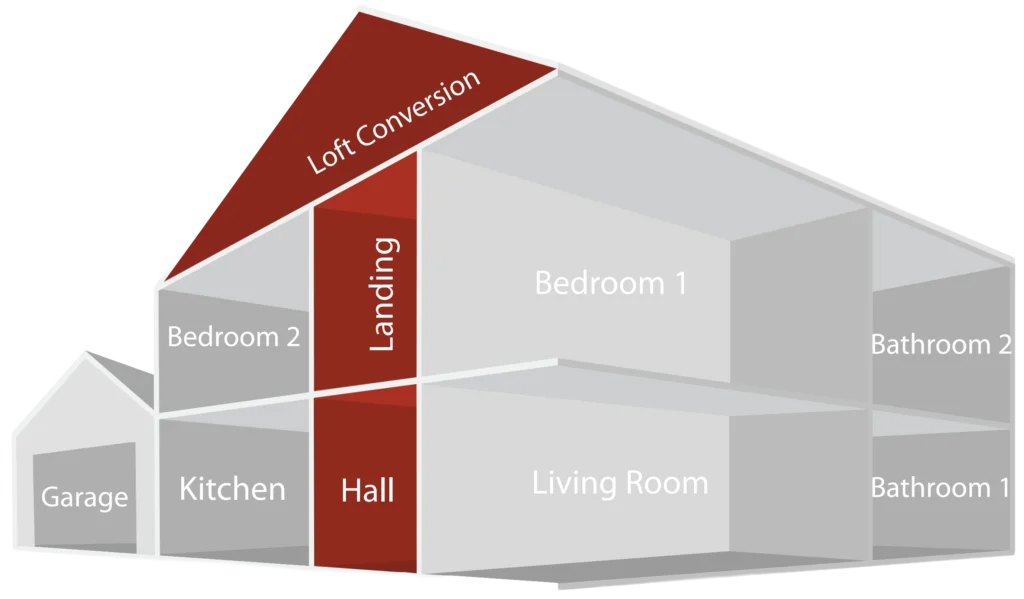
Protection levels describe where alarms are installed within a property.
LD3 systems provide detection in escape routes only. LD2 systems extend coverage to high-risk areas such as kitchens and living rooms. LD1 systems provide the highest level of protection, with detection throughout most rooms.
LD2 is the recommended standard for most domestic properties, providing practical protection across escape routes and high-risk areas without requiring whole-property coverage.
Plan Alarm Positions
View Smoke Alarm Placement GuideFire alarm requirements across the UK
Requirements vary across the UK.
In England, smoke alarms are required on each storey of all rental properties under the Smoke and Carbon Monoxide Alarm Regulations 2022. A carbon monoxide alarm is also required in any room used as living accommodation that contains a fixed combustion appliance, such as a gas boiler, gas fire, oil boiler or solid fuel appliance. Gas cookers are excluded from the English requirement.
Scotland has the strictest requirements in the UK. Since February 2022, all homes regardless of tenure must have interlinked smoke and heat alarms, installed to a specific standard. A carbon monoxide alarm is also required wherever there is a carbon-fuelled appliance or flue, though the carbon monoxide alarm itself does not need to be interlinked with the smoke and heat alarms.
In Wales, the Renting Homes (Fitness for Human Habitation) Regulations 2022 require rented homes to have mains-powered, interlinked smoke alarms on each storey. A carbon monoxide alarm is required in any room containing a gas, oil or solid fuel appliance. Unlike England, the Welsh requirement includes rooms with a gas cooker.
Additional requirements apply to specific property types, especially rented homes and houses in multiple occupation.
Rental Property Guidance
Landlord Fire Alarm RequirementsShared Property Guidance
HMO Fire Alarm RequirementsChoosing the right system
The correct system depends on the size and layout of the property, the number of floors, installation conditions and whether fuel-burning appliances are present.
For most 2-4 bedroom homes, a Grade D interlinked system with smoke alarms on each floor, a heat alarm in the kitchen and a carbon monoxide alarm where required will meet current UK requirements. Use the System Finder to get a specific recommendation for your property.
Most domestic systems use interlinked smoke, heat and carbon monoxide alarms to provide appropriate coverage.
Get a Specific Recommendation
Start System FinderFire alarm placement guidance
Correct placement is essential for effective fire detection.
In most properties, smoke alarms are installed in hallways and landings, while heat alarms are used in kitchens. Alarms should be installed on each storey and positioned away from vents or high-moisture areas.
Room-by-Room Guidance
View Placement GuideFire alarm kits
If you already know what you need, our property alarm kits include everything required to install a complete system: pre-matched alarms, interconnection capability and compliance guidance included.
These kits typically include smoke alarms for escape routes, heat alarms for kitchens and carbon monoxide alarms where required, along with interconnection capability to ensure all alarms sound together.
Ready to Buy?
Explore Property Alarm KitsFrequently asked questions
In Scotland, interlinked smoke alarms are a legal requirement in all homes regardless of whether the property is owned or rented. In England and Wales, interlinked alarms are required in rental properties and are strongly recommended as best practice in owner-occupied homes.Do I need interlinked smoke alarms in my home?
In England, landlords must install at least one smoke alarm on each storey of a rental property and a carbon monoxide alarm in any room containing a fixed combustion appliance. This includes gas boilers, gas fires, oil boilers and solid fuel appliances such as wood burners and open fires. Gas cookers are the only exception. In Wales, the requirement is similar but also extends to rooms with gas cookers. Scotland has stricter requirements and landlords must install interlinked smoke, heat and carbon monoxide alarms throughout the property.What fire alarms are required by law in rental properties?
Both Grade D1 and D2 alarms are mains powered. The difference is in the backup battery. D1 uses a sealed long-life battery that does not need replacing, while D2 uses a replaceable battery. D1 is generally considered lower maintenance and is widely used in rental properties.What is the difference between Grade D1 and D2?
In England, a carbon monoxide alarm is legally required in any room containing a fixed combustion appliance. This includes rooms with gas boilers, gas fires and oil boilers, as well as solid fuel appliances such as wood burners and open fires. Gas cookers are the only exception. In Wales, the requirement is similar but also extends to rooms with gas cookers. In Scotland, a CO alarm is required in any room with a carbon-fuelled appliance or flue, which in practice means most Scottish homes need one.Do I need a carbon monoxide alarm in my home?
Battery-powered and wireless interlinked smoke alarms can generally be installed by a competent homeowner without an electrician. Mains-powered alarms require connection to the mains electricity supply and should be installed by a qualified electrician. Use our System Finder to find out which type of system is right for your property.Can I install smoke alarms myself?