


Smoke Alarm Placement Guide UK – Where to Install Smoke, Heat and CO Alarms
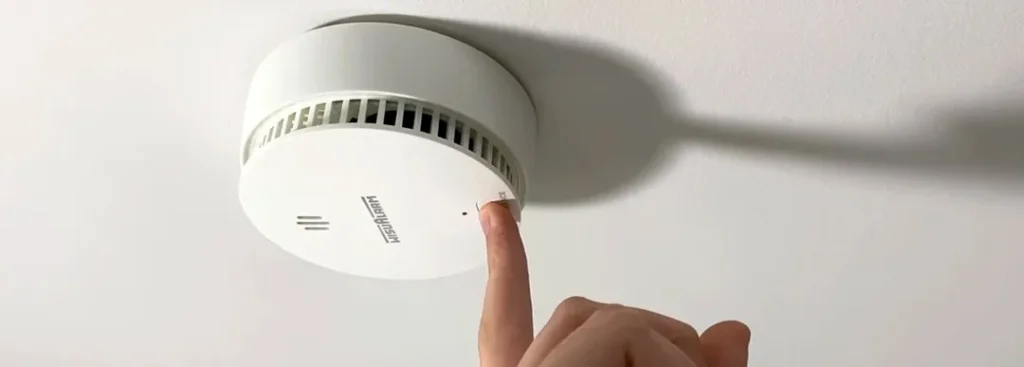
Getting smoke alarm placement right is one of the most important decisions in domestic fire safety. An alarm installed in the wrong location, or missing from a critical area, can mean the difference between early warning and no warning at all.
Consider a fire that starts in a kitchen while occupants are asleep upstairs. If smoke fills the hallway and staircase before an alarm activates, the only escape route may already be compromised. Correct placement in escape routes is not a technicality. It is the core purpose of a domestic fire alarm system.
In the UK, domestic fire alarm systems are designed in accordance with BS 5839-6, which provides guidance on where fire detection should be installed in residential properties. This guide explains where smoke alarms, heat alarms and carbon monoxide alarms should be installed, where they should be avoided and how to achieve effective fire detection throughout your property.
Huvo has been supplying domestic fire alarm systems to UK homes and businesses since 2012.
Find the Right Alarm Layout
Start System FinderWhy placement matters
A smoke alarm that activates too late, or not at all, provides no protection. Placement determines how quickly a fire is detected and how much time occupants have to respond and escape safely.
The primary purpose of a domestic fire alarm system is to protect escape routes. If smoke fills a hallway or staircase before occupants are alerted, the route out of the property may already be dangerous or impassable. This is why escape routes are always the first priority in any placement decision.
Beyond escape routes, the layout, size and use of individual rooms all affect where additional detection is needed. A system that is well matched to the specific property will detect fires earlier, produce fewer false alarms and give occupants the best possible chance of escaping safely.
How many alarms do I need?
The number of alarms required depends primarily on the number of floors in the property. Under standard LD2 guidance, which covers escape routes and high-risk areas, the following applies:
- One floor properties require at least one smoke alarm in the hallway or main circulation area and one heat alarm in the kitchen.
- Two floor properties require at least one smoke alarm on the ground floor in the hallway, one smoke alarm on the first floor landing and one heat alarm in the kitchen.
- Three or more floor properties require at least one smoke alarm on each floor in the main circulation area and one heat alarm in the kitchen.
Carbon monoxide alarms are additional to this and are required in every room containing a fuel-burning appliance regardless of the number of floors.
These are the minimum requirements under LD2 guidance. Some properties benefit from additional detection in living rooms, bedrooms or other areas. Use our System Finder to get a recommendation based on your specific property.
Get a Property-Specific Recommendation
Start System FinderRoom by room placement guide
The following guidance covers the most common rooms and areas in UK domestic properties.
Hallways and landings are the most important locations for smoke alarm installation. These are the escape routes occupants use to leave the property during a fire and smoke travelling through these areas must be detected as quickly as possible. At least one smoke alarm should be installed on every floor in the main circulation space.
Kitchens should always have a heat alarm rather than a smoke alarm. Cooking fumes regularly trigger smoke alarms in kitchens, leading to nuisance alarms and the dangerous habit of removing or disabling alarms to stop them activating during cooking. A heat alarm detects rapid increases in temperature rather than smoke particles and is specifically designed for kitchen environments.
Living rooms do not require a smoke alarm under minimum LD2 guidance, but additional detection in living rooms is recommended in larger properties, properties with open fires or wood-burning stoves and where a higher level of protection is preferred. In Scotland, smoke alarms in the main living area are a legal requirement.
Bedrooms do not require smoke alarms under standard LD2 guidance but are included in LD1 systems, which provide whole-property coverage. For properties where occupants spend extended time in bedrooms or where the bedroom is remote from the main escape route, additional detection is worth considering.
Utility rooms and laundry rooms can produce steam and condensation which may affect smoke alarm performance. A heat alarm is often more appropriate in these areas.
Garages are not typically covered by domestic fire alarm guidance, but where a garage is attached to the property and has an internal door, a heat alarm in the garage is a sensible precaution. A smoke alarm should not be used in a garage due to exhaust fumes and temperature extremes.
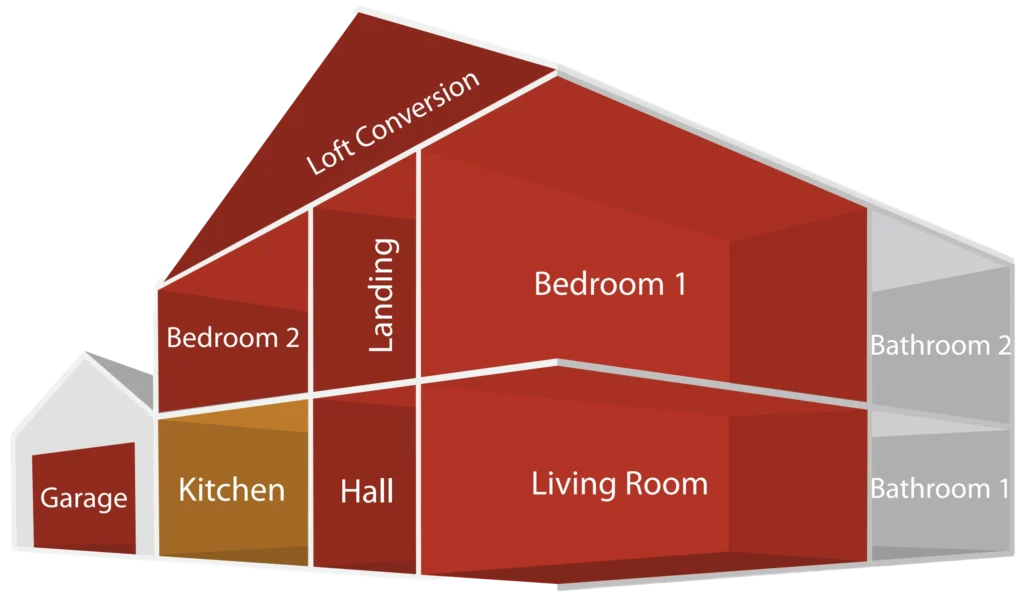
Smoke alarms in escape routes
Escape routes are always the first priority for smoke alarm placement. These are the routes occupants use to leave the property during a fire and typically include ground floor hallways, first floor landings, upper floor landings and stairwells.
Smoke alarms installed in escape routes detect smoke as it travels through the property and provide the earliest possible warning to occupants wherever they are. If a fire starts in a ground floor room and smoke enters the hallway, a smoke alarm in that hallway will activate before the escape route becomes compromised.
If escape routes are not protected, an alarm in a bedroom or living room may detect smoke earlier in that specific room, but occupants attempting to escape may then encounter a smoke-filled hallway with no prior warning. Escape route protection is the foundation of any effective domestic alarm system.
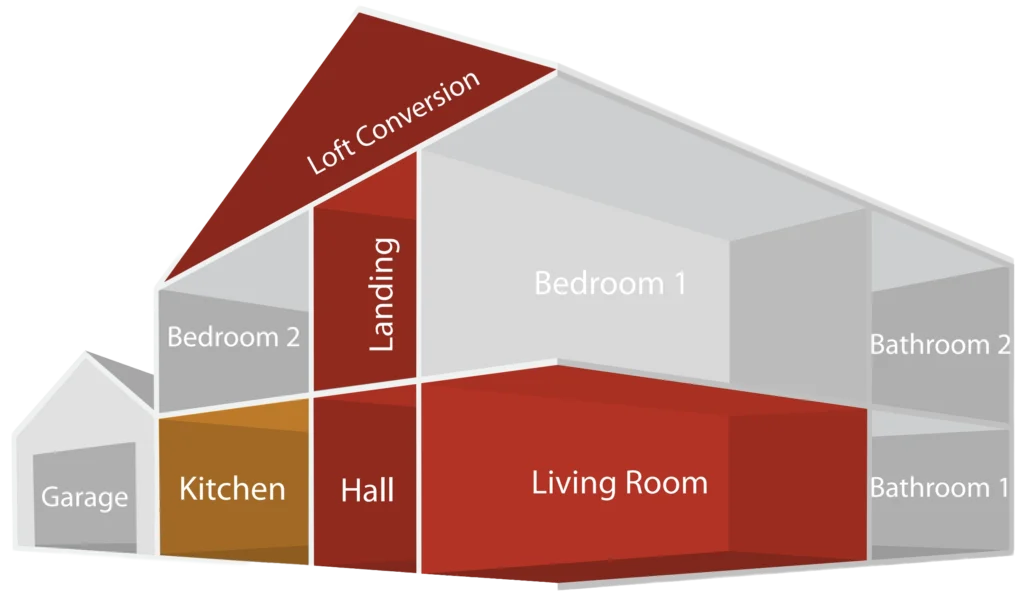
Hallway and landing guidance
In most two storey homes, smoke alarms should be installed in both the ground floor hallway and the first floor landing. Together these two alarms protect the complete escape route through the property.
The ground floor hallway alarm detects smoke entering from ground floor rooms and alerts occupants to evacuate upward or outward. The first floor landing alarm detects smoke rising from the ground floor and warns occupants in upstairs rooms before the staircase becomes dangerous.
In properties with three or more floors, the same principle applies to every level. One smoke alarm should be installed in the main circulation space on each floor.
In narrow or straight hallways a single centrally positioned alarm is usually sufficient. In larger entrance halls or L-shaped hallways, more than one alarm may be needed to ensure adequate coverage. If in doubt, follow manufacturer guidance or consult a qualified installer.
Open plan properties
Open plan layouts create a specific placement challenge that is worth addressing carefully.
Where a kitchen and living area are combined in a single open plan space, installing a smoke alarm in the living area may result in nuisance alarms from cooking. Installing a heat alarm in the kitchen area of an open plan space may not provide early enough detection in the living area.
The recommended approach for open plan kitchen and living spaces is to position a heat alarm in the cooking zone, close to the hob and oven, and a smoke alarm in the living zone at a sufficient distance from the cooking area to avoid nuisance activations. Many manufacturers provide guidance on the minimum distance between a smoke alarm and a cooking appliance, typically at least three metres.
Where an open plan space also forms part of the escape route or connects to a hallway, smoke detection in the circulation area remains the priority.
If you are unsure about the best approach for an open plan layout, a qualified fire alarm installer will be able to advise based on the specific dimensions and configuration of the space.
Smoke alarms in living rooms and bedrooms
Standard domestic alarm systems under LD2 guidance do not require smoke alarms in living rooms or bedrooms. However, additional detection in these rooms provides an earlier warning of fires that start within the room itself, rather than relying on smoke reaching the escape route before the alarm activates.
Adding smoke alarms in living rooms and bedrooms moves the system towards LD1 protection, which covers most rooms in the property. This is worth considering in larger properties where rooms are more remote from escape routes, in properties with open fires or wood-burning stoves in living rooms, where occupants spend extended periods in specific rooms and where a higher level of protection is preferred for peace of mind.
In Scotland, smoke alarms in the main living area are a legal requirement and must be interlinked with alarms in escape routes and the kitchen.
For more information on protection levels and system grades, see our Fire Alarm Grades guide.
Protection Levels and Grades
Fire Alarm Grades ExplainedLoft conversions and basements
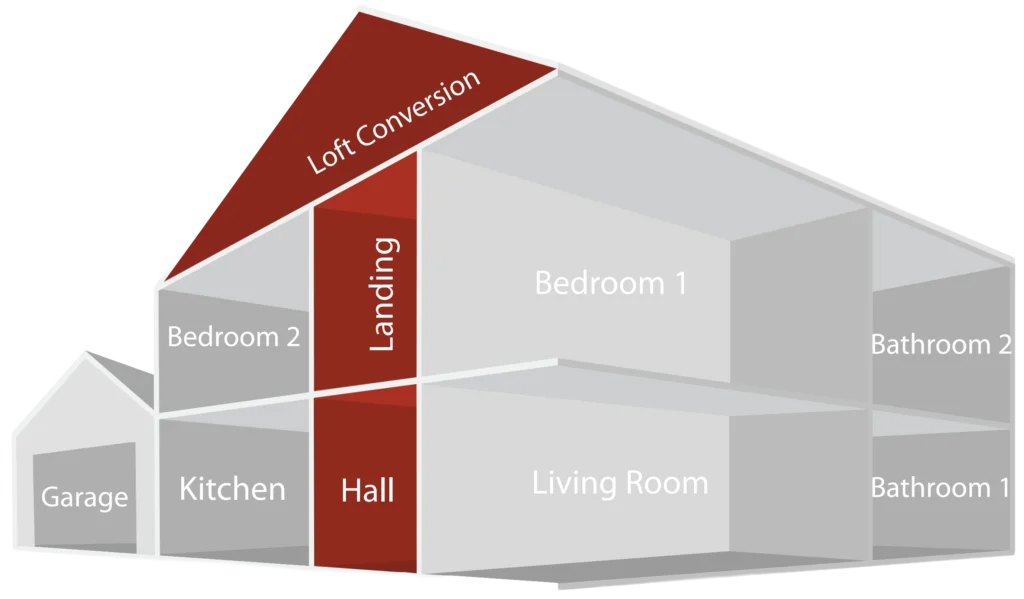
Loft conversions and basement rooms that are used as habitable living spaces should be treated as additional floors for alarm placement purposes. A smoke alarm should be installed in the circulation space on that level and the overall system should cover the complete escape route from the highest or lowest habitable floor to the exit.
For loft conversions accessed via a fixed staircase, a smoke alarm on the loft landing and in the stairwell leading to it is the standard approach. For loft conversions accessed via a hatch or ladder, smoke detection at the hatch level is recommended.
Basement rooms used as habitable space should have smoke detection in the escape route from the basement to the ground floor. Basements used purely for storage and not connected to the main living space do not typically require smoke alarms under standard domestic guidance.
Where smoke alarms should not be installed
There are several locations where smoke alarms should not be installed as they may cause nuisance alarms, fail to detect fires accurately or be damaged by environmental conditions.
- Kitchens should never have smoke alarms. Cooking fumes, steam and grease particles regularly trigger smoke alarms and the result is nuisance activations that lead occupants to disable or remove alarms. A heat alarm should always be used in kitchens instead.
- Bathrooms and shower rooms produce high levels of steam which can trigger smoke alarms and damage sensors over time. Smoke alarms should not be installed in bathrooms. If detection is required in a wet room, a heat alarm may be more appropriate.
- Garages are unsuitable for smoke alarms due to exhaust fumes from vehicles and temperature extremes. A heat alarm is more appropriate in an attached garage with an internal door to the property.
- Areas near air vents, extractor fans or draughts should be avoided as strong airflow can disperse smoke before it reaches the sensor and delay detection.
- Dead air spaces such as the apex of a steeply pitched ceiling, corners of rooms and areas behind beams or joists can trap air and prevent smoke from reaching the sensor. Alarms should be positioned to avoid these areas.
- Within 300mm of a wall or light fitting, as this is a dead air zone where smoke circulation is reduced.
- Within three metres of a cooking appliance, because smoke and steam from cooking can trigger nuisance alarms.
Heat alarms for kitchens and other areas

Heat alarms detect rapid increases in temperature rather than smoke particles, making them suitable for areas where smoke alarms would cause nuisance activations.
A heat alarm should always be installed in the kitchen as part of any domestic alarm system. It is the standard recommendation under BS 5839-6 and provides reliable detection of fires in the kitchen environment without the nuisance alarm problems associated with smoke alarms in cooking areas.
There are two main types of heat alarm. Fixed temperature alarms activate when the air temperature reaches a set threshold, typically 58 degrees Celsius. Rate of rise alarms activate when the temperature increases rapidly over a short period of time, which can provide earlier detection of fast-developing fires. Many modern heat alarms combine both detection methods.
Heat alarms are also appropriate in garages with internal doors, utility rooms where steam and condensation may affect smoke alarm performance and loft spaces where temperature extremes make smoke alarms unsuitable.
Heat alarms should not be used as a substitute for smoke alarms in escape routes or other areas where smoke detection is required. They are a complement to smoke alarms rather than a replacement.
Kitchen Fire Detection
Explore Heat AlarmsCarbon monoxide alarm placement
Carbon monoxide alarms should be installed in every room containing a fuel-burning appliance. Unlike smoke, which rises, carbon monoxide circulates through the air and CO alarms are most effective when positioned at breathing height, approximately one to one and a half metres from the floor.
CO alarms should not be placed directly next to or above a fuel-burning appliance, but should be within the same room and close enough to detect CO as it builds up.
For properties with fuel-burning appliances in more than one room, one CO alarm should be installed in each room. Our System Finder takes the number of rooms with fuel-burning appliances into account and will recommend the correct number of CO alarms for your property.
For full guidance on CO alarm placement, requirements and what to do if your alarm sounds, see our Carbon Monoxide Alarm Guide.
CO Alarm Guidance
Carbon Monoxide Alarm GuideBasic positioning guidelines
The following guidelines apply to smoke alarm positioning in most domestic properties.
Alarms should be installed on the ceiling wherever possible as smoke rises and ceiling installation ensures the alarm is in the path of rising smoke.
Alarms should be positioned at least 300mm from any wall, partition or light fitting to avoid dead air zones where smoke circulation is reduced.
In rooms with sloped or pitched ceilings, alarms should be installed near the highest point of the ceiling while avoiding the apex where dead air can accumulate. A position approximately 600mm below the apex is generally recommended.
In rooms with very high ceilings, alarms may be less effective as smoke can cool and disperse before reaching the ceiling. A qualified installer can advise on the best approach for rooms with high or unusual ceiling configurations.
Alarms should not be painted over or obscured by furniture, curtains or other fittings as this can impair performance.
Always follow the specific installation instructions provided with your alarm as positioning requirements can vary between manufacturers and products.
Interlinked alarm systems
In most modern domestic properties alarms are interlinked so that when one alarm activates, all alarms in the property sound together.
This is a critical feature for effective placement because it means an alarm in the kitchen or a bedroom will alert occupants throughout the entire property, not just in the immediate area.
Without interlinking, a smoke alarm in the hallway will only sound in the hallway. An occupant asleep in a bedroom at the far end of the property may not hear it in time to escape safely. With interlinking, the same alarm activates every alarm in the property simultaneously.
This is why placement and interlinking work together. A well-placed interlinked system ensures that wherever a fire starts, every occupant in every part of the property is alerted at the same time.
Interlinking can be achieved through hardwired connections in mains-powered systems or wirelessly in battery-powered systems. Both methods are equally effective in ensuring all alarms sound together.
Interlinked Systems
View Interlinked Smoke AlarmsScotland specific requirements
Scotland has the most comprehensive domestic fire alarm placement requirements in the UK. Since February 2022, all homes in Scotland regardless of whether they are owned or rented must meet specific requirements.
One smoke alarm must be installed in the room most frequently used during the day, which is typically the main living room or lounge. One smoke alarm must be installed in every circulation space on each storey, which includes hallways and landings. One heat alarm must be installed in every kitchen. A carbon monoxide alarm must be installed in any room with a fixed combustion appliance or flue. All alarms must be interlinked.
For properties with more than one living area, each main living area requires a smoke alarm. This is different from the standard LD2 approach used in England and Wales, which does not require smoke alarms in living rooms as a minimum.
Scottish requirements result in a system that is broadly equivalent to LD2 protection with the addition of living area detection. For landlords in Scotland, these requirements apply to all rental properties and compliance is a legal obligation.

Testing and replacement
Smoke alarms should be tested monthly by pressing the test button and holding it until the alarm sounds. This confirms the alarm circuit and sounder are functioning but does not test the sensor itself.
Alarms should be replaced every ten years as a general guide, though always follow the manufacturer’s stated service life for the specific product. After ten years the sensor in a smoke alarm can degrade and may not detect smoke as effectively even if the alarm appears to be functioning normally.
CO alarms have a shorter service life of typically five to seven years and should be replaced when they reach the end of their stated service life. Check the replacement date printed on the unit.
For landlords, testing alarms at the start of each tenancy is a legal requirement in England, Scotland and Wales. Keeping a record of tests and replacements is good practice and supports compliance documentation.
If any alarm fails a test or produces a low battery warning, it should be investigated and replaced promptly. A disabled or non-functioning alarm provides no protection.
Choosing the right system
The right system for your property depends on the number of floors, the layout of the property, whether fuel-burning appliances are present and whether the installation will be carried out by a qualified electrician or without wiring.
Most domestic properties use a combination of smoke alarms in escape routes, a heat alarm in the kitchen and CO alarms where required, all interlinked to ensure whole-property alerting.
Not sure what you need? The System Finder takes your property details, number of floors, location and installation setup into account and recommends the right combination of alarms for your specific property in under a minute.
Get a Recommended Layout
Start System FinderFrequently asked questions
In a two bedroom house with two floors, install a smoke alarm in the ground floor hallway, a smoke alarm on the first floor landing and a heat alarm in the kitchen. Add CO alarms in any room with a fuel-burning appliance. In Scotland, also add a smoke alarm in the main living room.Where should I put smoke alarms in a two bedroom house?
No. Under standard LD2 guidance, smoke alarms are required in escape routes on each floor, which means hallways and landings. A heat alarm is required in the kitchen. You do not need smoke alarms in every room, though additional detection in living rooms and bedrooms provides a higher level of protection.Do I need a smoke alarm in every room?
No. Cooking fumes and steam will cause nuisance alarms. A heat alarm should always be used in the kitchen instead of a smoke alarm.Can I put a smoke alarm in the kitchen?
A heat alarm should be installed on the ceiling in the kitchen, positioned away from the cooker and hob, and at least 300mm from any wall. It should not be positioned directly above a cooking appliance.Where should a heat alarm be installed?
Smoke alarms should be installed on the ceiling wherever possible. If wall mounting is necessary, they should be positioned between 150mm and 300mm below the ceiling. They should be at least 300mm from any wall, partition or light fitting.How high should smoke alarms be?
At minimum, one smoke alarm on each floor in the main escape route plus a heat alarm in the kitchen. A one floor property needs one smoke alarm and one heat alarm. A two floor property needs two smoke alarms and one heat alarm. A three floor property needs three smoke alarms and one heat alarm. CO alarms are additional and based on the number of rooms with fuel-burning appliances.How many smoke alarms do I need in my house?
Ceiling mounting is always preferred as smoke rises and ceiling installation places the alarm in the path of rising smoke. Wall mounting is acceptable if ceiling mounting is not possible, but the alarm should be positioned between 150mm and 300mm below the ceiling level.Do smoke alarms need to be on the ceiling?
Smoke alarms should be positioned at least 300mm from any wall, partition or light fitting to avoid dead air zones where smoke circulation is reduced.How far from the wall should a smoke alarm be?
Yes. Interlinking all alarms in the property means that when any alarm activates, all alarms sound together throughout the property. This is strongly recommended for all domestic properties and is a legal requirement in Scotland.Should smoke and CO alarms be interlinked?